
A south-facing window can still be a bad spot for basil if the pot sits above a hot radiator. The glass provides light, but warm, dry air can pull moisture from the leaves while cold glass chills the roots at night. Start by matching herbs to the light and temperature at the sill, then give each one a pot that drains.
“Sunny” means something different indoors. An insect screen, deep overhang, neighboring building or short winter day can sharply reduce the light that reaches the leaves. Check the sill at different times of day before buying plants. Herbs that tolerate household conditions and bounce back from an occasional lapse in care are usually a better starting point than those that grow fastest outdoors.
Start with the window, not the seed packet
In the Northern Hemisphere, an unobstructed south-facing window usually gets the longest stretch of direct light; in the Southern Hemisphere, that is generally a north-facing window. East-facing windows offer gentler morning sun, which can suit herbs that dislike intense afternoon heat. But orientation is only part of the picture: an open east window may provide more light than a south window shaded by a balcony.
Watch where the sun falls for a few days. On a deep sill, a plant set back from the glass may get much less direct light than one at the front edge. If growth leans toward the window, turn the pot a quarter turn every week or two. Keep foliage off cold glass, and move pots clear of drafts when you open the window in winter. A radiator below the sill means checking the soil more often, not watering automatically every day.
For an easy start, pick two or three herbs with similar moisture needs. Rosemary, thyme and oregano like their potting mix to dry somewhat between waterings; parsley and chives prefer more even moisture. Individual pots are easier to manage than one decorative trough.
Herbs that earn their space indoors
Thyme: compact and forgiving of drier soil
Thyme suits a bright, warm sill. It stays fairly small, needs little fertilizer and does not require constantly moist soil. Common thyme is useful in cooking, while lemon thyme has a different scent and flavor. Both can struggle if the mix stays wet. Let its upper portion dry, then water thoroughly and empty the saucer.
Trim soft stem tips rather than cutting into old, leafless wood, which may not readily sprout again. Long stems with widening gaps between leaves suggest too little light. Moving the pot to a brighter part of the window will help more than fertilizer.
Oregano: productive with regular trimming
Oregano also likes a bright sill and a relatively dry watering routine. Its stems can sprawl, so leave space between the leaves and the glass or blind. Harvest the growing tips to encourage branching: cut above a pair of leaves, leaving enough foliage for the plant to regrow.
Plants labeled simply “oregano” can vary in flavor, so taste a leaf before counting on one for cooking. Pale, rapid growth with little aroma can signal insufficient light. As with thyme, soggy mix is generally more troublesome than a brief dry spell.
Chives: useful where the sun is less intense
Chives grow in clumps of narrow leaves and are easy to harvest a little at a time. They tolerate a bright window with less direct sun than thyme or rosemary, though growth slows when light is scarce. Keep the mix lightly moist, not waterlogged. Snip leaves near the base rather than trimming only their tips; new leaves emerge from the clump.
When the roots fill the pot and water runs through quickly, divide the clump or move it to a slightly larger container. Chives may also slow down seasonally. A pause during a dark winter is not, on its own, a reason to water more.
Parsley: steady harvests with steadier moisture
Flat-leaf and curly parsley can both grow indoors with bright light and more consistent moisture than Mediterranean herbs need. Check the mix before it dries out completely, especially in a small pot. Harvest outer stems at the base and leave the younger growth in the center. Plucking individual leaflets can leave bare stems without making much use of the plant.
Parsley is a biennial. It typically produces leaves in its first year and may flower in its second. Once a flower stalk appears, leaf quality and production often decline; starting a replacement is usually more practical than trying to keep the old plant going indefinitely.
Rosemary: low watering needs, higher light demands
Rosemary appears on many easy-herb lists because it dislikes wet roots. Indoors, it also needs very bright light and good air movement, and damp roots can cause it to decline quickly. Reserve it for a genuinely sunny, unobstructed window rather than a room that merely looks bright. Let some of the mix dry, then water thoroughly and allow the excess to drain.
Before bringing a new plant inside, look for fine webbing or stippled leaves—possible signs of spider mites, which can become a problem in dry indoor air. Rosemary can live for years in suitable conditions, but a dim winter sill is less forgiving for it than for thyme or oregano. It is an option for your best window, not a guaranteed beginner plant.
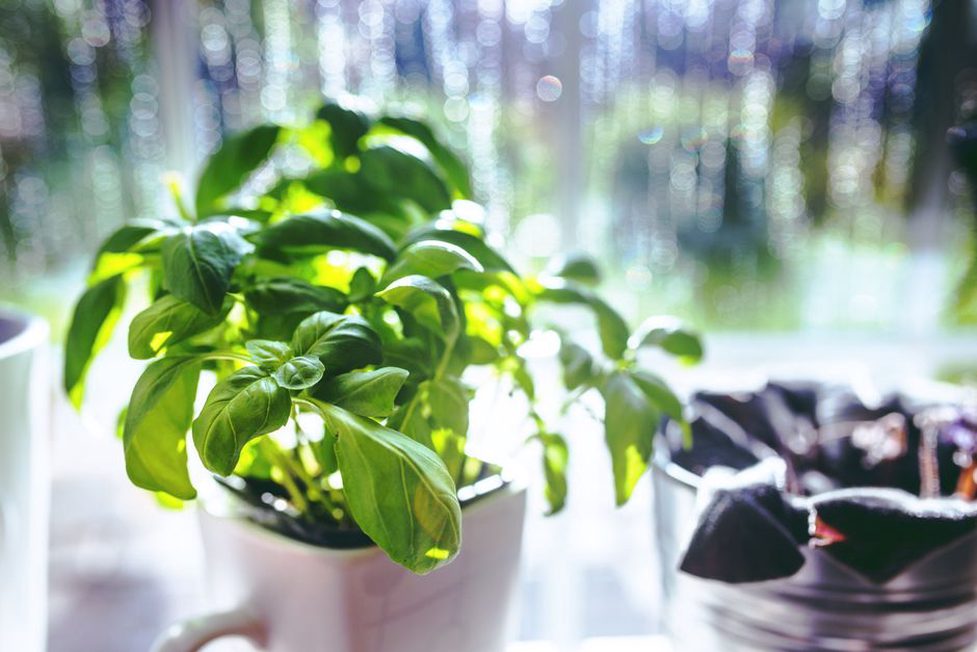
Basil: worthwhile if you can give it warmth and water
Basil is productive, but it asks for more attention than most of the herbs here. It needs strong light, warmth and more frequent watering than thyme or oregano. Cold glass and drafts can damage it; a hot radiator can dry a small pot quickly. If you cannot avoid those conditions, chives or parsley may be an easier first purchase.
Cut basil just above a pair of leaves so side shoots can develop, and remove emerging flower buds if you want to keep harvesting leaves. A crowded supermarket pot may hold many seedlings competing for water and root space. Carefully dividing it into a few pots can help, although some stems may wilt during the change.
Use containers that make watering predictable
A drainage hole matters more than the material of the pot. Without an outlet, water can sit around the roots even when the surface looks dry. Protect the sill with a saucer and empty it after watering. If you prefer a decorative pot without a hole, put a smaller draining pot inside it and check for water collecting underneath.
Choose a container only a little wider than the root mass. A large volume of unused, wet mix dries slowly, particularly in winter. For many starter herbs, a pot about 12–15 cm (5–6 inches) across offers growing room without taking over the sill, though the right size depends on the plant. Use a lightweight potting mix made for containers; garden soil can compact in a small pot and restrict drainage.
Perlite or another coarse amendment can add air space to a dense, wet mix. A layer of stones at the bottom, however, cannot replace a drainage hole. Think about the sill itself before filling it with pots: a waterproof tray can be easier to clean than several saucers, provided the pots do not stand in pooled water. Keep window handles, blinds and any opening needed for ventilation accessible. These practical details make plants easier to live with, a concern also explored in [biophilic design beyond renderings](/biophilic-design-urban-architecture/).
Water by checking the mix, not the calendar
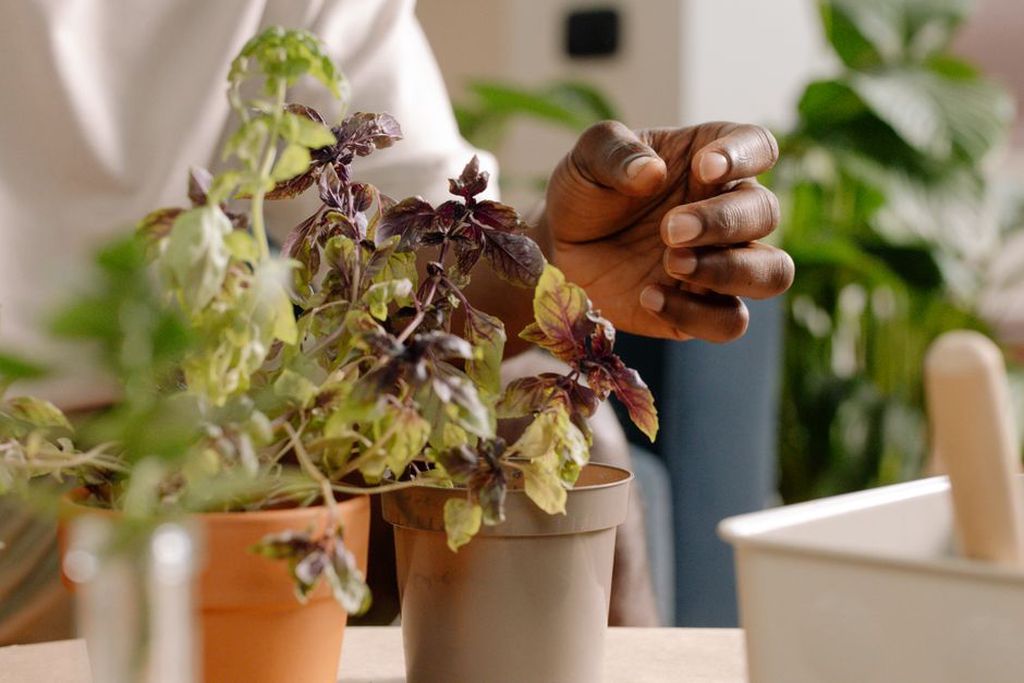
Push a finger about 2–3 cm (roughly an inch) into the mix, or lift the pot to learn its weight when dry and freshly watered. For thyme, oregano and rosemary, wait until the top layer dries and the pot feels noticeably lighter. Water parsley, chives and basil before the root zone dries out completely. The interval will change with pot and plant size, sun exposure and indoor heating.
Water enough to moisten the root ball and see some water run through the drainage hole, then empty the saucer. Small daily splashes may wet the surface while leaving lower roots dry. Repeatedly watering damp mix, on the other hand, limits air around the roots. Even drooping is not proof of thirst: damaged roots in wet soil can leave a plant looking wilted. Check the mix first.
Water can leave mineral residue on pot rims or leaves, but most culinary herbs do not need a special water source. Let very cold tap water warm closer to room temperature before using it on a warm pot. Misting leaves is no substitute for watering a dry root ball.
Feed lightly and harvest with the plant’s growth in mind
Potting mix has a limited supply of nutrients, and regular harvests eventually use some up. During active growth, a diluted, balanced fertilizer applied according to its label may help. Start conservatively. Excess fertilizer can produce soft growth, and no amount will make up for inadequate light. If growth slows in a dark season, check light and temperature before feeding.
Harvest lightly from young plants until they have more foliage. Cut branching herbs such as basil and oregano above a leaf node; cut chives low on the clump and take parsley’s older outer stems. Do not strip most of the leaves from a small plant at once—those leaves supply the energy for regrowth. Clean scissors help avoid damaging tender stems when you want just a few sprigs for a meal.
Seeds cost less per plant but need a longer stretch of careful moisture control, often with more light than a winter windowsill can supply. A healthy small nursery plant is usually the easier path to an immediate kitchen harvest. Look for firm, well-colored leaves, check their undersides for insects and avoid plants with roots circling densely inside the pot. Inspect each new herb before setting it beside established plants.
Read warning signs before changing the routine
- Long, weak stems and widely spaced leaves: The plant probably needs more light. Move it closer to an unobstructed window, or use a suitable grow light if the window falls short.
- Yellowing lower leaves and persistently wet mix: Check drainage, water less often and empty the saucer.
- Dry, crispy edges and a very light pot: Water the root ball thoroughly. If water runs straight down the sides, the mix may be so dry that it needs time to absorb moisture.
- Tiny moving insects or fine webbing: Isolate the pot, inspect leaf undersides and identify the pest before treating it. Check nearby plants too.
- A few older leaves dropping after a move: Monitor new growth while the plant adjusts. Relocation, repotting or a change in light can cause temporary leaf loss.
One discolored leaf is not a reason to change watering, fertilizer and location all at once. Check the soil, examine both sides of several leaves and watch the newest growth. New leaves tell you more about whether conditions have improved; old ones will not turn green again.
A manageable first arrangement
If you have a bright sill with room for three draining pots, put thyme and oregano in the strongest direct light and chives at the slightly less sunny end. Give each pot its own saucer. Check the mix twice a week at first, watering only the plants that need it. If hot afternoon sun dries the chives’ pot too quickly, move it just outside the strongest rays or choose another herb that tolerates drier soil.
Before a trip of several days, water only the plants that are due for it and move them out of intense heat if needed. Do not leave the pots submerged in a tray. On an ordinary week, check each pot’s mix when you reach for herbs to cook. Separate pots let you cut thyme tonight without assuming the parsley needs water too.