
A bottle marked “all-purpose” may still be wrong for natural stone, unfinished wood or a surface that touches food. The name gives you a broad idea of what the product does; the directions set the limits. Before using an unfamiliar cleaner, check the approved surfaces, how much to apply, whether rinsing is required and what precautions to take.
Labels pack claims, symbols and small print into limited space. Reading them in a consistent order helps separate instructions from marketing. That matters especially in buildings where the buyer is not the person doing the cleaning: facilities staff need directions they can follow across different rooms, finishes and shifts.
Start with the product’s job, not its front-label claims
“Cleaner,” “degreaser,” “disinfectant” and “descaler” describe different jobs. A cleaner removes soil; a degreaser tackles oily deposits. A descaler targets mineral buildup, often in wet areas. A disinfectant is intended to kill specified microorganisms when used as directed. One bottle may have several uses, but each can call for a different method.
Take a claim such as “kills 99.9% of bacteria.” Which bacteria? On which surfaces? After how long? Depending on the jurisdiction, disinfectant claims may be regulated and carry a registration or authorization number. That number identifies a regulatory category or approval, not permission to use the product everywhere. A disinfectant intended for hard, nonporous surfaces should not be assumed effective on upholstery.
“Natural,” “plant-based,” “non-toxic” and “eco-friendly” can mean different things and may say little about the hazards of the finished mixture. Plant-derived ingredients can irritate skin, while a mild cleaner can damage a particular finish. Read the use instructions, ingredient information where available and specific warnings rather than relying on the headline claim.
Read the directions as a sequence of conditions
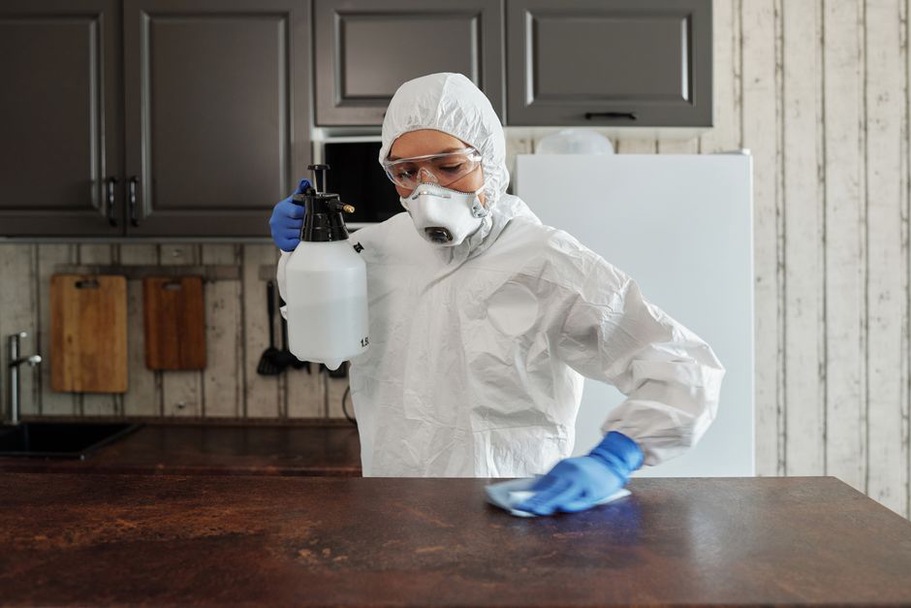
Directions often specify more than where to spray. They may call for dilution, removal of visible dirt, a particular amount of product, a period when the surface must stay wet and a final rinse. Skip one condition and you may change the result. With a disinfectant, wiping the surface dry straight away may fail to meet the stated contact time.
Concentration and dilution
A concentrate is not just a stronger ready-to-use cleaner. The label may give separate dilutions for routine cleaning, heavy soil and disinfection. Adding extra concentrate is not necessarily more effective; it can leave residue, increase exposure, damage finishes and raise costs. Follow the stated measurement method, including whether a ratio means one part product plus a specified number of parts water.
If the directions say to add 10 mL of concentrate to 1 L of water, measure both rather than guessing with a bottle cap. Use a clearly marked container and make only what you can use within any stated period. Some diluted solutions have a limited usable life; follow the label or accompanying instructions on when to replace them.
Contact time and rinsing
Contact time is how long a treated surface must remain wet for a stated sanitizing or disinfecting claim. It is not necessarily the time a general cleaner needs before being wiped off. When a label gives separate cleaning and disinfection methods, choose the one that matches the task. If the surface dries too quickly, you may need to apply enough product to keep it wet for the specified period, as directed.
Rinsing matters too. Some products require a potable-water rinse on food-contact surfaces; others must be rinsed from certain materials to prevent residue. Don't assume a product is “no-rinse” because it leaves little visible foam. Check the directions for the specific surface and use.
Surface restrictions and testing
“Hard surfaces” does not mean every countertop, floor or fitting. Acidic descalers can attack acid-sensitive stone and cement-based grout. Abrasives may dull coatings, while strong alkaline products can harm some metals or painted finishes. Labels may exclude aluminum, unsealed stone or unfinished timber, or advise testing in a hidden spot.
A spot test can reveal discoloration, dulling or softening, but it cannot establish long-term compatibility. For a valuable or warranted finish, check the cleaner's directions against the finish manufacturer's care requirements. A product approved for ceramic tile, for instance, may be unsuitable for the stone threshold beside it.
Understand warnings without treating every symbol as interchangeable
Signal words and hazard symbols convey different kinds or levels of concern under the labeling system used in a particular country. “Danger,” “Warning” and “Caution” are prompts to read the accompanying hazard statement. A symbol for corrosive effects means something different from one for flammability. If a symbol is unfamiliar, read the text beside it rather than guessing.
Labels may distinguish risks to eyes, skin and breathing, as well as damage to materials. They may warn that a product is harmful if swallowed or must be kept away from children. A warning about the concentrate may not describe a correctly diluted solution in the same way, but dilution does not remove the need to follow handling instructions.
- Personal protection: Check whether gloves, eye protection or other equipment are required, particularly when pouring concentrates or working overhead.
- Ventilation: Follow any instruction to use the product in a ventilated area. Spraying creates different exposure conditions from applying liquid to a cloth.
- First aid: Find the directions for eye or skin contact and accidental swallowing before putting a product into shared use.
- Storage: Observe temperature limits, child-access warnings and any instruction to keep the product in its original container.
Never mix cleaning products unless the manufacturer expressly directs it. Bleach-containing products, in particular, should not be mixed with acids or ammonia-containing cleaners: dangerous gases can result. Using products one after another can also cause unintended mixing if residue remains. Rinse and dry the surface as directed before switching.
Find out what the ingredient list can—and cannot—tell you
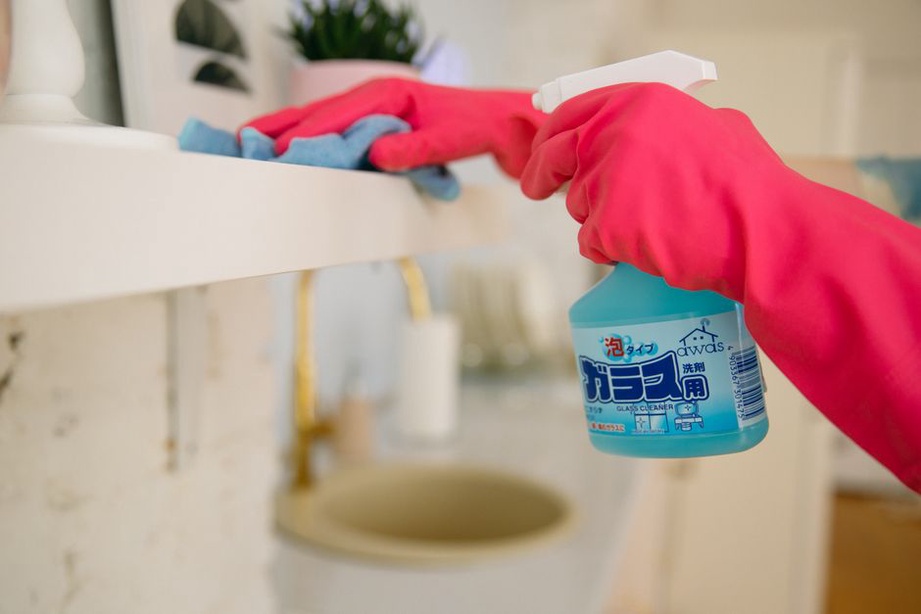
Ingredient disclosure varies by product type and jurisdiction. A label might list active ingredients, broad ingredient classes or fragrance components, or refer users to other product documents. An “active ingredient” is responsible for a claimed function such as disinfection. Other ingredients may dissolve soil, stabilize the formula, add scent or adjust acidity.
An ingredient name is useful, but it does not reveal the full formulation, the concentration at the point of use or compatibility with a particular material. “Fragrance-free” generally means no fragrance has been added; “unscented” may describe a product whose scent has been masked. Definitions and labeling practices vary. In fragrance-sensitive spaces, check the product information rather than relying on its name.
In workplaces, a safety data sheet provides more detail on hazards, exposure controls, storage and spill response. It complements the container label and directions; it does not replace them. Staff should be able to match each sheet to the product in use, especially when similar bottles are stored together. Local workplace rules may also require labeling and training.
Check whether a certification answers your actual question
Third-party marks assess particular criteria, such as ingredient restrictions, environmental performance or packaging. Their scope varies. An environmental mark does not automatically establish that a cleaner is safe for marble or that a disinfectant works against a particular organism. Check the named standard, the product category it covers and whether the mark applies to the finished product or only to a packaging feature.
“Biodegradable” is not a disposal instruction. It may describe particular ingredients under test conditions, not the whole product or the safe disposal of unused concentrate. Whether packaging can be recycled depends on its material and local collection rules. Follow the label's disposal directions and the rules where the product is used.
Translate labels into a building-specific cleaning schedule
For property owners and facilities managers, the question is not simply which product to buy. It is which product belongs on each surface, and how staff should use it. A cleaning schedule can list the room or asset, approved product, dilution, application method, contact time where relevant, rinsing requirements and material exclusions. That helps prevent a cleaner chosen for a restroom fixture from turning up on a reception countertop.
Consider a shared kitchenette. Removing grease from a worktop and disinfecting it after contamination are separate tasks. The first may call for a general cleaner and a rinse, depending on the label. The second may require a product authorized for that purpose, applied to a precleaned surface and left wet for its stated contact time. If food will be prepared there, follow the food-contact rinsing directions too. Write these steps into the procedure rather than assuming one quick spray covers both jobs.
Storage and dispensing determine whether staff can follow those directions. If a concentrate needs precise dilution, provide a measuring device or compatible dosing system. Label secondary containers as local rules require, and never use a drink bottle. Keep the original product information available so a decanted spray bottle does not become an unidentified liquid. When buying for multiple properties, check that staff can read the instructions in the languages they use. A replacement product may look similar but require a different dilution or contact time.
A quick label-reading order at the shelf
- Match the job: Is it a cleaner, descaler, sanitizer or disinfectant suited to the task?
- Check the surface: Look for stated uses, exclusions and food-contact directions.
- Read the method: Note dilution, precleaning, application amount, contact time and rinsing.
- Review safety: Check handling precautions, ventilation, first aid and storage.
- Check practical fit: Can staff follow the method with the available equipment and time?
If two products appear suitable, compare their directions before their front-label claims. A disinfectant that needs ten minutes of wet contact may not suit a surface that must return to use sooner. Choose a product whose full instructions can actually be followed on that surface—and record those instructions in the cleaning schedule.