
A $240 annual insurance bill can make one month look expensive and the next eleven look cheaper than they really are. Record the $240 when it leaves your account, then note that it works out to about $20 a month for planning. Keeping cash paid separate from costs spread over time makes the record more useful.
You do not need a perfect account of every financial detail to get started. You need to know how much left your accounts, where it went, and which costs will come back. A simple record you keep up is worth more than an elaborate spreadsheet you stop using after two weeks.
Choose the month and the scope first
A calendar month lines up neatly with bank statements, utility bills, and rent or mortgage payments. If a payday-to-payday period suits your income better, use that instead. Keep the start and end dates consistent and label each period. Otherwise, a bill near the boundary can distort the comparison.
Decide whose spending belongs in the record. An individual tracker might cover your accounts and your share of joint bills. A household tracker should include purchases made from every account used by the household, without counting transfers between those accounts as spending. Keep rental property or building-project costs separate: mixing a repair invoice with groceries makes both totals harder to read.
Tracking records what happened; a budget sets amounts you intend to spend. If you do not yet know your usual grocery, transport, or maintenance costs, collect a month of transactions before setting firm targets. The Encyclopaedia Britannica’s overview of budgeting explains how a spending record can feed into a broader plan.
Pick one recording method you can maintain
A notebook, spreadsheet, or bank export can all do the job. Choose one that fits how you pay and how often you will update it, rather than one with the most features.
- Notebook: Works for a small number of transactions if you prefer to write purchases down as they happen. Leave room for monthly category totals.
- Spreadsheet: Helps when several accounts or household members are involved. A basic table lets you sort entries and check totals.
- Bank or card exports: Save time when most payments are electronic. Check for pending transactions, refunds, transfers, and duplicates before trusting the totals.
Whichever method you use, record the date, merchant or description, amount, category, and account or payment method. Add a short note when the purpose is not clear. For shared bills, include the portion that belongs in your tracker. A “period covered” or “property” field can also help with annual bills and project costs.
An entry could read: “April 8 | hardware store | $36 | home maintenance | debit card | replacement faucet cartridge.” The note tells you it was a repair, not a decorative purchase from the same store. There is no need to itemize a grocery receipt unless the distinction will help you make a decision.
Build categories that answer useful questions
Start broad enough that you can categorize a purchase without hesitation, but not so broad that the totals tell you nothing. Five to ten main categories are often manageable in the first month. Split one later if it grows large or combines costs you would treat differently.
| Category | What to include | Possible distinction |
|---|---|---|
| Housing | Rent, mortgage payment, property tax, building charges | Separate principal and interest if you need that detail |
| Utilities and communications | Electricity, heating, water, internet, phone | Note billing periods when comparing seasons |
| Food | Groceries and prepared meals | Separate dining out if that informs your decisions |
| Transport | Public transit, fuel, parking, vehicle upkeep | Separate regular commuting costs from repairs |
| Health and personal | Medical costs, insurance, personal care | Identify payments that may be reimbursed |
| Home and property upkeep | Routine supplies, servicing, minor repairs | Flag major improvements separately |
| Other spending | Clothing, recreation, gifts, miscellaneous purchases | Split out a recurring cost when useful |
Consistent definitions matter more than a perfect list of categories. A supermarket receipt might contain food, cleaning supplies, and toiletries. Split it if you need an accurate grocery figure. Otherwise, put it in the category that accounts for most of the purchase and apply the same rule next time. A $4 cleaning product rarely warrants ten minutes of analysis.
Use neutral labels. “Dining out” describes a cost; “wasteful meals” puts a judgment in the data. The point is to see your choices clearly, including those you are happy to keep.
Separate recurring, variable, and occasional costs
Rent may stay the same each month; electricity and groceries may not. Insurance, service contracts, appliance replacement, and some property taxes can arrive only once or twice a year. Mark these patterns so a quiet month does not give you a misleading picture of your usual costs.
For planning, divide a known annual bill by 12. A $600 building insurance premium represents $50 a month. Keep that $50 in a planning column or note, separate from cash spending: in the month you pay $600, adding the monthly figure to the cash total would count part of the cost twice. Divide known quarterly bills by three for a monthly planning amount.
Collect transactions without counting them twice
Gather statements or exports for every account used during the period, including current accounts and credit cards. Add payment methods missing from those records. Save cash receipts or enter cash purchases soon afterward; a withdrawal shows where you obtained the cash, not what you bought. If a receipt is gone, mark an estimate as an estimate rather than making up a precise amount.
Be consistent about dates. A card purchase made on April 30 might post on May 2. You can use either the purchase date or the posting date, but switching between them weakens month-to-month comparisons. Posting date is often easiest with statement exports. Note a substantial pending payment at month-end so you know why it appears in the next period.
Record credit-card purchases as expenses. When you pay the card balance from your bank account, mark that payment as a transfer or debt repayment, not another purchase. Moving $200 from checking to savings is likewise a transfer, not consumption. Interest and fees are costs, so include them.
You can enter a refund as a negative amount in the original category and note which purchase it relates to. If a $75 home item bought in March is refunded in April, April’s cash flow includes a $75 inflow; linking it to the March purchase keeps the category history understandable. Do the same for employer reimbursements and repayments from housemates. The payment and repayment are separate cash movements, even when your final share is small.
Handle shared bills with a consistent rule
Say you pay a $120 electricity bill and a housemate sends you $60. In an individual tracker, show your $60 share and note the full payment and reimbursement. In a household tracker, record the $120 bill once and treat the reimbursement as an internal transfer. Either way, household electricity spending is not $180.
Make room for housing and property costs
A mortgage payment, insurance premium, utility bill, and roof repair all relate to the same building, but they tell you different things. If you own property, separate ordinary running costs from major repairs or improvements. A one-off replacement should not look like a permanent increase in routine maintenance when you compare years.
During construction or renovation, label invoices by project as well as category. Track deposits and final payments against the same contract, and note what is committed but still unpaid. A monthly expense record shows when cash left your account; it cannot show the full remaining cost of unfinished work on its own. Keep a separate list of agreed work and outstanding balances, especially in months with few invoices.
Housing costs can also be seasonal. Heating, groundskeeping, and maintenance callouts may cluster at certain times of year. Once you have enough history, compare the same season across years rather than expecting January and July to match. For owner-occupied homes, the U.S. Department of Housing and Urban Development’s homeownership information covers responsibilities beyond the purchase payment.

Review the month before making changes
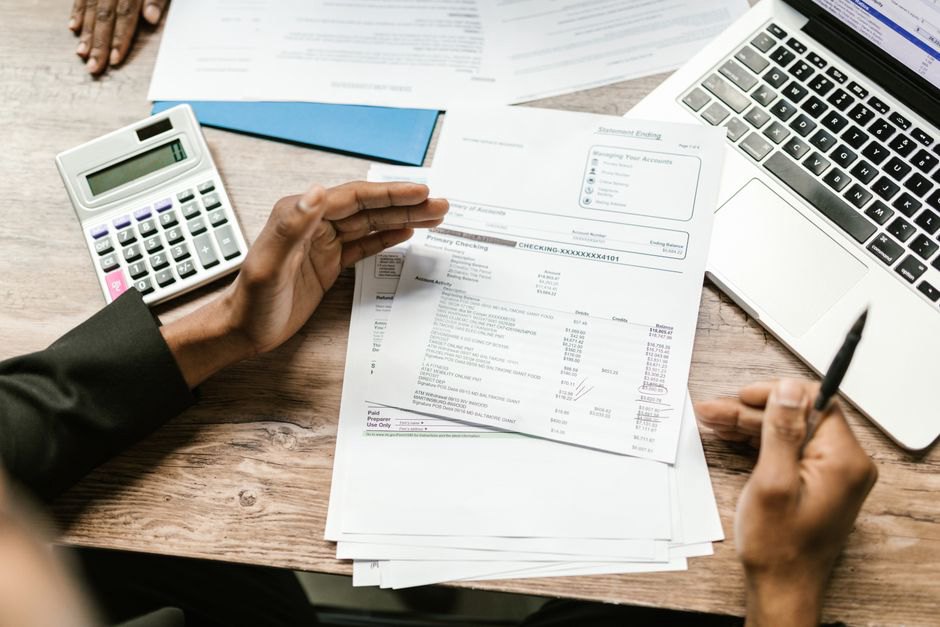
Update entries at a regular time, perhaps once or twice a week. At month-end, compare your record with account activity. Make sure every account is included, card payments have not become duplicate expenses, and large or negative entries have explanations. A tidy spreadsheet total can still be incomplete.
Review the figures in this order:
- Total cash outflow: How much left your accounts, excluding transfers between your own accounts?
- Category totals: Where did most of that money go?
- Recurring commitments: Which payments will return, and when?
- Unusual items: Which costs were one-off, seasonal, refunded, or reimbursed?
- Planning amounts: How much should you set aside over time for known irregular bills?
Before reading too much into a change, check the timing. Higher food spending in April might reflect an extra grocery trip near the month boundary or a household gathering. One month does not establish a trend. After three or more months, patterns become easier to spot, though seasonal bills may need a longer comparison.
Let the figures lead to a few specific checks: a service renewal date, an upcoming maintenance bill, or the usage and billing period behind a utility increase. The record points to questions; it does not answer all of them. A higher heating bill could reflect weather, rates, occupancy, equipment performance, or a longer billing cycle.
Keep the system accurate without making it intrusive
Expense records may contain addresses, account details, and purchasing information. Store a spreadsheet in an account with a strong password and suitable access controls. If others share the tracker, agree on who can edit it and whether everyone should see personal purchases. Leave full account numbers and unnecessary personal details out of transaction notes.
Do not spend hours fixing every uncertain entry. A clearly described “uncategorized” transaction is better than a missing one. At month-end, resolve ambiguities that materially affect the totals and note minor ones you cannot verify. Consistency is more useful than false precision.
After your first month, write three figures beside the transaction list: total recorded outflow, monthly planning amounts for known irregular bills, and the amount you could not classify. If the last figure is $18 from two missing cash receipts, call it “cash purchases, estimated” rather than assigning it to categories without evidence. Next month, you will know exactly what to record sooner.