
A planter that feels light when empty can be surprisingly heavy once filled with wet potting mix. Before buying pots or seedlings, check what the balcony can safely hold, where water will drain and whether the door and access routes will stay clear. Those constraints should shape the garden from the start.
Start with the balcony, not the plant list
Measure the usable floor area, railing height and space needed to open the door fully. Note access to windows, utility equipment and anything that requires maintenance. Then watch the light at different times of day. The direction a balcony faces tells only part of the story: an overhang or neighboring building may shade a south-facing space, while reflected heat can make a west-facing one unusually hot.
If possible, track direct sun for a few days. Around six hours or more supports many fruiting vegetables and sun-loving herbs; three to six hours can suit leafy crops and some herbs. With less light, look for shade-tolerant foliage plants or edible greens suited to your climate, and expect slower growth. Season, temperature and nearby buildings will affect the result.
Check wind separately. An upper-floor balcony can be much more exposed than a garden at ground level. Look for persistent drafts, gusts around corners and shelter beside walls. Locate the drain and check whether the surface is waterproofed and where runoff would go. Water must not pool against the door threshold or spill onto a balcony below.
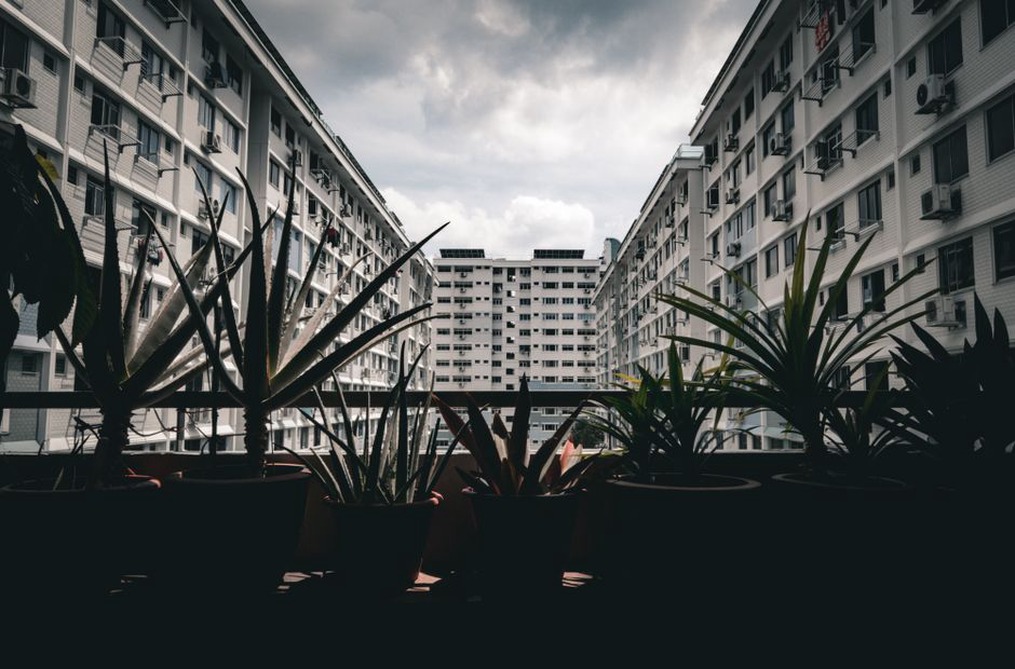
Confirm what the building permits
A balcony is part of the building’s structure and drainage system, not just spare outdoor floor space. Check the lease, building rules or owners’ association requirements before installing anything. They may restrict railing planters, visible screens, drilling, exterior attachments, irrigation or soil and equipment storage. Even freestanding items may be subject to height or wind-resistance rules.
Do not assume a generic balcony load figure applies to your building. Capacity depends on the balcony’s design, condition and local requirements. If you want large raised beds, numerous heavy ceramic pots or water-filled containers, ask the property manager or a qualified structural professional for building-specific guidance. Count the container, wet mix, stored water and mature plant when considering weight. A row of heavy pots along one edge can concentrate the load.
Keep pots inside the railing unless an approved system expressly permits another arrangement, and never set an unsecured container on top of a guardrail. Do not drill into the facade, slab or waterproofing membrane without authorization: even a small opening can let water into the building. For background on why a balcony is treated as a distinct building element, see the architectural definition of a balcony.
Draw a layout that preserves access
Sketch the space before placing pots. Mark the door swing, drain, access panels and any route that must remain clear. Put herbs you harvest often within easy reach. Set larger containers where you can tend every side without leaning over the railing.
A few planting zones usually work better than pots scattered through every corner. A narrow group against a wall might hold herbs and greens, with one deeper container in a sheltered corner. Check each pot’s footprint, including its saucer, and leave room to lift it for cleaning. You should still be able to spot leaves blocking the drain.
Growing vertically adds planting area, not load capacity. A freestanding shelf needs a stable base, adequate capacity when loaded and permission under building rules. Put heavier pots on lower shelves and secure the unit against wind using an approved method. Wall racks and railing baskets also need permission and suitable fixings; improvised hooks or zip ties are not dependable substitutes.
Keep tall plants clear of doors and sightlines, and consider the view from neighboring homes. A dense privacy screen can catch considerable wind. If a trellis is permitted, size it to the planter and its anchoring; a shallow pot may not keep a large climber upright in gusts.
Select plants for the conditions you actually have
Match light, space and harvest expectations
Start with a short list of plants you will use or enjoy. Herbs suit small spaces because modest containers can provide frequent small harvests. Basil generally needs warmth and good light. Parsley and mint can tolerate some shade, although results vary by climate. Keep mint in its own pot if you do not want it spreading through a mixed planting.
Leaf lettuce, arugula and other greens that regrow after cutting can do well with several hours of light and protection from intense afternoon heat. Tomatoes and peppers usually need more direct sun, deeper containers, steady watering and support. Compact cultivars help, but check mature size: a “patio” label does not mean any small pot will do.
Choose ornamentals for local temperatures as well as the balcony’s exposure. A shade-tolerant plant may still struggle in a hot, reflective corner; a sun-loving one may dry out too quickly in strong wind. Check local invasive-plant guidance and any pet-safety concerns for your household.
Use fewer, better-sized containers
Root space affects both plant growth and how often you need to water. A pot that neatly fits a young plant may dry out quickly once its roots fill the space. Choose containers with drainage holes and enough depth for the crop’s roots and mature size. Nursery tags are a useful starting point, but allow more room for a plant that will stay in its pot all season.
Resin or fabric containers may weigh less when empty than glazed ceramic, though their filled weight still matters. Fabric pots can dry quickly in exposed spots; dark pots can heat up enough to stress roots in strong sun. Choose a stable shape with a broad base rather than a tall, narrow pot that tips easily.
Use container potting mix, not soil dug from the ground. Potting mix holds moisture while leaving air around roots; garden soil can compact in a pot and drain poorly. Leave space below the rim so water can soak in without carrying mix over the edge. If plants share a container, pair those with similar light and water needs rather than putting a drought-tolerant herb beside a thirsty leafy crop.
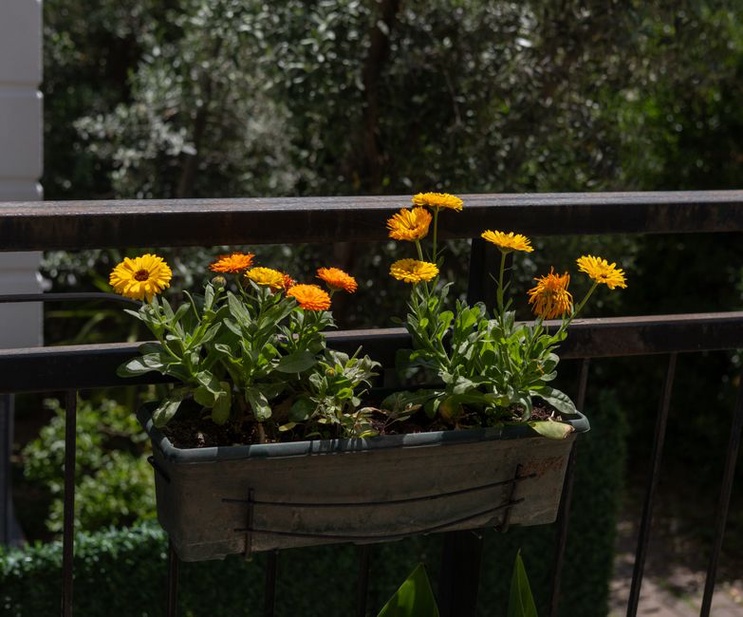
Make watering safe for plants and neighbors
Balcony pots often need checking more frequently than garden beds. Their roots have limited space, and wind speeds drying. Feel the mix a short distance below the surface instead of watering by a fixed calendar. If it feels dry there, water slowly until the mix is evenly moist. Plant size, weather, pot material and season will change the routine.
Use saucers or trays large enough to catch runoff, then empty excess water after drainage finishes. Roots should not sit in standing water, particularly where mosquitoes are a concern. If permitted, suitable feet or stands can keep moisture from being trapped under pots. Never block the balcony’s designed drain; a tray manages water from a pot, not drainage for the building.
Pour near the soil surface rather than spraying over the railing. A narrow-spout watering can gives you more control than a hose in a tight space. Self-watering planters may reduce how often you water, but learn how the reservoir works and check the soil periodically. Automated irrigation needs particular care with connections, overflow and building restrictions.
Container nutrients are gradually used by plants or washed out. Follow the fertilizer label and begin conservatively: too much can harm roots and create unwanted runoff. For edible plants, use a product labeled for that purpose. Remove spent leaves and harvest regularly so pest damage is easier to notice early.
Plan for weather, maintenance and seasonal changes
Balconies have their own microclimates. Walls may hold heat after sunset, while wind can cool leaves and dry potting mix fast. In a heatwave, temporary shade may help an overheated pot more than repeated watering. Before severe wind, bring loose small pots and tools indoors if it is safe. Never reach over a railing to retrieve or secure them.
Roots in pots have less insulation from cold than roots in the ground. A plant considered hardy locally may still need a larger pot, a sheltered position or indoor winter storage. Check whether a species can overwinter in a container before buying it as a permanent feature. Empty and clean unused pots; store bags of mix where they cannot get wet, heavy or windblown.
Spend a few minutes each week checking pot stability, open drainage holes, pest damage and trays that need emptying. Clear fallen leaves from the balcony drain. Prune according to the plant’s needs; removing too much at once can slow recovery. If a plant repeatedly struggles, reassess its position and pot size before adding more water or fertilizer.
Build the first version in stages
Start with two or three containers and watch them for several weeks before adding more. You will learn how light and watering work in that particular spot without committing to a full layout. It also keeps initial costs focused on suitable pots, potting mix, plants or seeds, and a way to water without uncontrolled runoff. Shelves, screens and irrigation can wait until they solve an observed problem.
For a partly sunny balcony, a starting arrangement could be a medium pot of parsley, a separate pot of mint and a wider container of greens that regrow after cutting. Keep them inside the guardrail and clear of the door swing and drain. During the first warm week, feel the mix below the surface each morning; that observation will give you a better watering routine than a fixed schedule on a plant tag.