
A 25-minute train ride may be enough to read a project brief, but not to settle a difficult design question. A drive might suit an audio lesson or a quiet transition home; it is no place for a meeting that requires looking at drawings. Decide what the trip can reasonably hold before you leave, rather than treating it as extra desk time.
Useful does not always mean getting more work done. Resting your eyes, arriving less distracted or getting off one stop early for a walk may be worth more than clearing another dozen messages. The choice depends on the time, attention, safety requirements and control you actually have.
Start with the commute you really have
For a few ordinary days, note which parts of the trip are usable. Door-to-door time includes waiting, transfers, parking and walking; it is rarely one uninterrupted block. Do you usually get a seat? Is the connection reliable? Is the trip predictable enough for a scheduled call? A 40-minute commute with two transfers may offer three short windows, not one long session.
It helps to sort possible activities by the attention they need:
- Low attention: listening to familiar material, checking a short list or choosing one priority for the day.
- Moderate attention: reading, annotating a document, studying vocabulary or drafting a few notes while seated.
- High attention: complex writing, comparing drawings or making sensitive decisions. These usually call for a stable desk and fewer interruptions.
Your mode of travel sets the limits. Drivers and cyclists need to concentrate on the road; pedestrians need to stay alert at crossings and on shared paths. Passengers may be able to read or write, but crowds, motion sickness and poor connectivity can make audio or rest a better choice. Keep a short list of suitable options instead of giving every trip the same job.
Give each journey one modest purpose
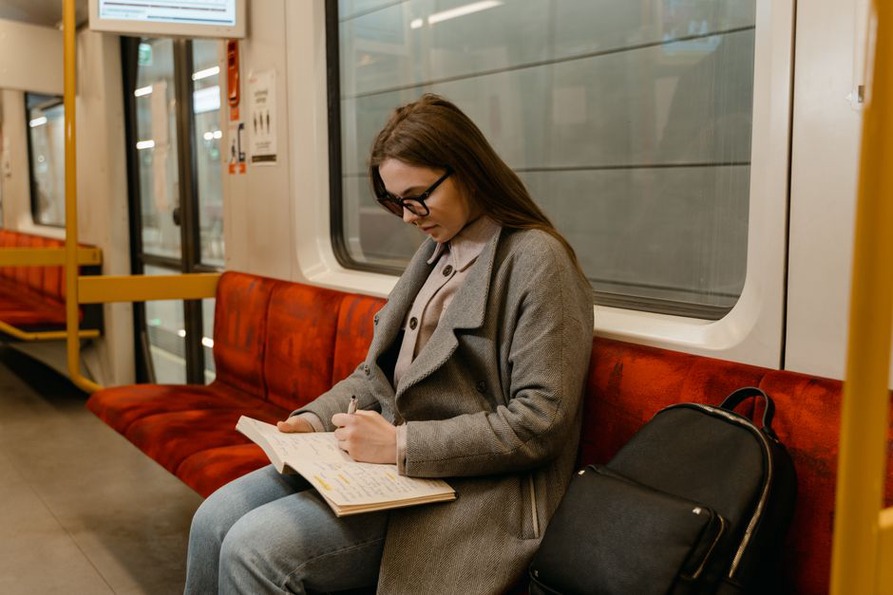
A defined task is easier to start than a vague plan to “catch up.” Before boarding, pick something with a stopping point: read six pages, outline three questions for a meeting or listen to one recorded lesson. If the trip has transfers, use the first segment to review the task and the last to note what remains. Then you can stop without losing your place.
For architecture and property teams, that task might be listing questions from a site visit, spotting missing information in a consultant update or preparing a client meeting agenda. Approving a technical detail on a small phone screen is another matter. “Verify door clearance against the current plan” is a sounder note than trying to resolve the issue without the full drawing set.
Try a simple rhythm: choose one priority on the way in, do one low-effort activity during the trip, then make a brief handoff when you arrive. Put a note in the right project file or set a reminder to review an issue at your desk. Otherwise, a useful thought can vanish between the station and the first meeting.
Choose activities that fit your mode of travel
On public transport: work in interruption-sized pieces
A seat on a train or bus can give you time to read, write or practise a language, but expect to be interrupted. Download material before leaving if service drops along the route. Save a report as a readable file rather than depending on a live browser tab, and keep a short note ready for ideas that come between stops. If you often stand, choose something you can pause immediately, such as audio or a few flashcards, without needing both hands.
Consider other passengers’ space and your own information. Keep headphone volume from carrying, and remember that someone may be able to see client names, floor plans or financial details on your laptop. For sensitive project work, draft a general task list on the train and open the documents somewhere private. Earbuds do not make a confidential conversation private on a crowded carriage.
When driving: prepare audio, then leave the phone alone
Choose a podcast, audiobook or recorded briefing before the vehicle moves. Pick something you can follow without looking at a screen or repeatedly changing tracks. Do not take notes, read messages or attempt detailed calls while driving. Rules on devices and hands-free systems vary by location, but following them does not replace attention to traffic.
Silence is an option too. A few minutes without new information may help you order the day or decompress after a difficult conversation. If you need to record an idea, park somewhere safe first. A voice note made after the trip may be clearer than hurried dictation over road noise.
When walking or cycling: let movement do some of the work
An active commute already combines travel with physical activity. Britannica’s overview of active transportation describes walking and cycling as ways to make routine trips without motorized travel. You need not add a learning task. On some routes, noticing your surroundings and arriving ready to focus is enough.
If you listen while walking, keep the volume low enough to hear vehicles, bikes and other people. On a bicycle, put traffic sounds and applicable local rules ahead of entertainment. Consider the route as well: a quieter street with safer crossings may be preferable to the shortest path. Test a new route at your usual travel time, when traffic and lighting may differ.
Prepare a small menu, not a rigid timetable
Energy and conditions change. Keep a few options ready so you do not start the trip by scrolling through your phone: a short article for a seated ride, downloaded audio for a crowded one, and a question to think through while walking. Include a no-input option for tired days.
Preparation can take less than five minutes at the end of the workday. Put tomorrow’s document in an accessible folder, download audio over Wi-Fi, charge headphones if needed and check for planned disruptions. In project work, clear file names help: a project name, date and status are easier to recognize than several versions labelled “final.”
Allow for delays. A task that needs exactly 30 uninterrupted minutes is a poor match for a 30-minute trip. Pick something you can finish in 10 to 15 minutes or resume without retracing your work. If the journey runs smoothly, you can take on a second small task.
Use the ride to reduce friction at either end
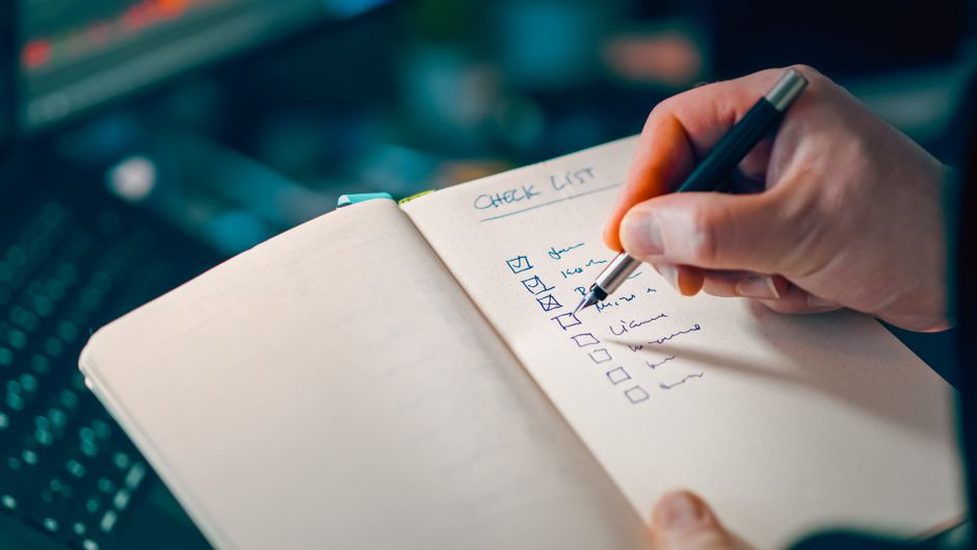
The best use of a commute may be deciding what happens when you arrive. On the way to work, identify your first action at the desk. “Open the latest survey and mark three unresolved measurements” is easier to act on than “work on the survey.” If a meeting comes first, choose the question that needs an answer rather than rehearsing every possible discussion.
On the way home, a brief shutdown routine can keep work from spilling into the evening. Record unfinished tasks, confirm any deadline that needs attention tomorrow, then stop checking messages. If you drive, make those notes before departure or after parking. The point is not to put more work into personal time; it is to stop relying on memory to hold open tasks overnight.
Household tasks can fit too, if the setting allows. A passenger might confirm an appointment or check a shopping list. A driver can use the trip to decide whether an errand is necessary. Leave purchases and the sharing of personal details until you have a more suitable connection and setting.
Make learning small enough to retain
Audio courses, professional talks and books can make repetitive trips a regular opportunity to learn. But listening is not the same as understanding. Choose material you can follow without constant rewinding. Later, write down one useful point and one question. If you cannot explain the main idea in a sentence, replay a short section before starting something new.
For built-environment professionals, a talk on accessibility, building operations or public-space design can raise worthwhile questions. It cannot replace current codes, jurisdiction-specific guidance or approved project documents. Technical requirements change, and an audio explanation may leave out the conditions that determine whether a rule applies.
Match reading to the screen and the length of the trip. A short article may work on a phone; a detailed drawing, cost schedule or marked-up contract may not. If you need to cross-reference several sections, save the document for your desk and note exactly what you need to check.
Know when not to fill the time
Not every trip needs content. Noise, crowds and notifications may already be competing for your attention. Adding a demanding task can leave you more tired, not better prepared. A quiet ride, a walk without headphones or a few minutes away from a screen can create a useful boundary between work and home.
Pay attention to what is not working. If you repeatedly miss your stop, feel nauseated while reading, cannot recall what you heard or arrive more tense than when you left, change the activity. Audio may suit a passenger who gets motion-sick while reading. Someone who finds audio draining may prefer silence or a paper notebook when stationary.
Accessibility and comfort matter too. Standing through a long trip, managing mobility equipment or making several transfers can demand considerable attention. A reliable route and enough recovery time may matter more than any task list. Plan for the commute you have, not an ideal seat in a quiet carriage.
Review the plan against actual results
After a week, ask whether your choices helped you arrive prepared or rested. Count completed actions only if they mattered: one clarified meeting question may be more useful than several half-read messages. Notice which trips were too crowded, noisy or unpredictable for the task. You may find that one direction suits focused reading and the other is better left free.
Make one small adjustment. If you keep abandoning a long report after two stops, try a one-page brief. If a podcast makes the drive feel rushed, spend the first ten minutes in quiet. For tomorrow, set out one activity you can interrupt without losing your place—and be willing to leave it untouched if the trip calls for your attention elsewhere.