
A plant that looks healthy on a bright shop shelf may struggle several metres from your window. Check the light where you plan to put it before choosing a species. An “easy care” label cannot make up for a dim position: growth may slow, and the potting mix can stay wet longer.
Your first houseplant needs to fit your home, the time you can spend checking it and the space it will need as it grows. You can work out much of that before shopping. At the shop, a closer look at the leaves, roots and pot can help you avoid pests or a plant already in poor condition.
Start with the room, not the plant display
Assess light at the intended position
Window direction is a starting point, not a verdict. In the Northern Hemisphere, a south-facing window generally gets stronger sun than a north-facing one; the pattern reverses in the Southern Hemisphere. Buildings, trees, deep window reveals, blinds and tinted glass can all cut the light. It also drops as you move away from a window, so judge the shelf or floor position you intend to use, not the room as a whole.
Look at that spot in the morning and afternoon. Does direct sun reach it? For roughly how long? Is the light bright but filtered through a curtain, or is it dim even on a clear day? “Low-light tolerant” does not mean a plant will thrive in a windowless room. If there is no useful daylight, a suitable grow light on a consistent schedule is more realistic than an ordinary ceiling fixture.
Too much direct sun can also cause trouble. A plant accustomed to greenhouse shade may scorch against hot glass. If the spot gets strong afternoon sun, choose a species that tolerates it or move the pot farther back. That is usually easier than trying to rescue a poor match later.
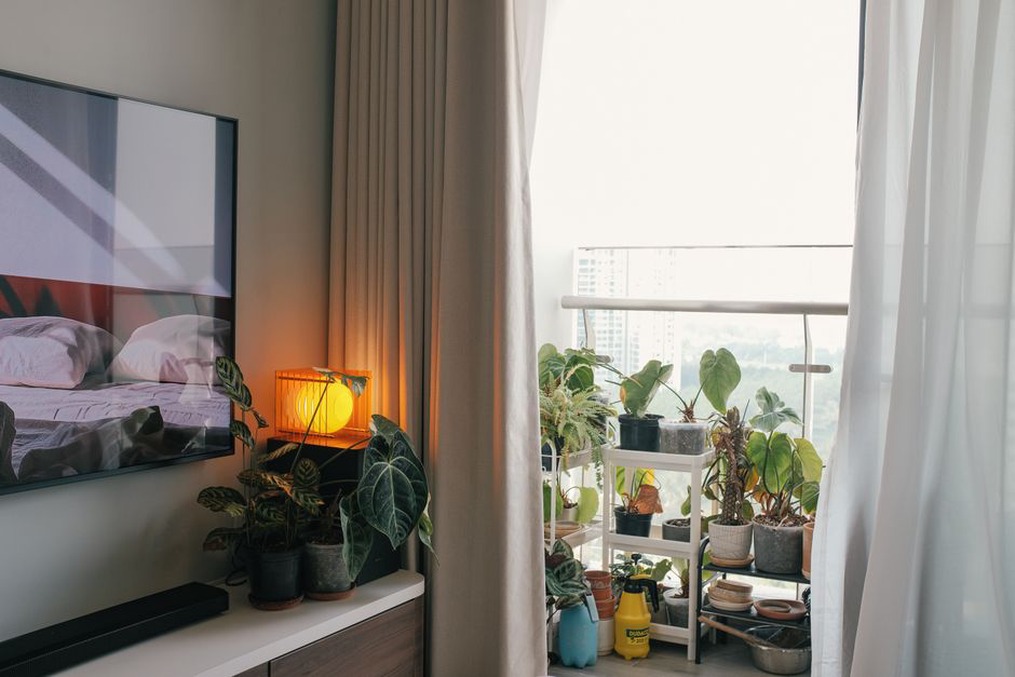
Check temperature, airflow and available space
Many tropical houseplants sold for indoor use do well at typical occupied-room temperatures, but conditions vary within a room. Keep pots away from heating outlets, radiators and exterior doors that are opened often. Leaves pressed against a cold window can suffer even when the room feels comfortable. Dampness around a pot can also mark timber and other moisture-sensitive finishes.
Measure the width and height of the space before you buy. A small trailing plant may eventually hang over a shelf edge; an upright one may run out of headroom. Make sure you can reach the pot to inspect and water it without spilling. If you rent, a freestanding shelf may be preferable to ceiling hooks. A hanging plant needs a fixing rated for the combined weight of the pot, wet mix and foliage.
In an interior plan, greenery needs more than an empty gap in a rendering. It needs daylight, maintenance access and room for people to pass, with nearby finishes protected from water. The same test works at home: can you walk past the plant and lift its pot out for watering?
Choose a plant whose care fits your routine
“Beginner-friendly” means a plant tolerates a range of conditions, not that it needs no care. A snake plant or ZZ plant may suit someone who checks pots less often, provided it gets some useful light and its roots are not kept wet. Pothos and heartleaf philodendron can be manageable in brighter indoor spots, but you still need to check when their mix dries. A spider plant is another option for a reasonably bright position. Varieties can differ, especially variegated ones, so start with the exact label rather than assuming lookalikes need identical care.
Think about what you can reliably do:
- If you travel often: consider a plant that tolerates its mix drying between waterings, rather than one that needs consistently moist conditions.
- If you tend to water frequently: do not assume extra water will help a drought-tolerant plant. Check the mix first.
- If you have one bright windowsill: find out whether the species prefers direct sun or bright indirect light. They are not interchangeable.
- If you have pets or young children: check the safety of the exact species before buying and consider whether its eventual position is truly out of reach.
Broad labels such as “palm,” “fern” or “succulent” can cover plants with quite different needs. Ask for the botanical name if the label is vague. It will help you check mature size, watering preferences and toxicity. Do not assume an unfamiliar plant is safe for a pet because you often see it in homes. Some popular houseplants can irritate the mouth if chewed, and the risk depends on the species and animal. If a pet eats a plant and develops symptoms, contact a veterinarian or animal poison service.
Be realistic about humidity, too. A bathroom may suit some moisture-loving plants if it has enough natural light, but steam cannot make up for darkness. Grouping plants may modestly change conditions immediately around them; it will not turn a dry room into a greenhouse. For a first purchase, a species comfortable in ordinary indoor conditions is often easier to manage than one that needs reliably high humidity.
Inspect the individual plant before paying
The right species can still be a poor buy if the individual plant is unhealthy. Look beyond the best leaf at the front of the display. Gently turn the pot and inspect beneath the leaves, along the stems and where leaf stalks join the main stem. Pests often hide there.
- Leaves: look for a generally firm, consistent appearance. One older yellow leaf may be harmless, but widespread yellowing, soft patches or extensive browning need a closer look.
- Stems and growing points: look for firm growth rather than mushy or blackened areas. Check whether new leaves appear healthy.
- Pests: watch for fine webbing, sticky residue, cottony white clusters, small bumps attached to stems or insects moving beneath leaves. A visibly infested plant is a difficult first-care project.
- Potting mix: if possible, smell the surface. A sour smell or persistently soggy mix may point to poor drainage or root problems. A little surface debris is different from a dense, slimy layer.
- Pot and roots: check for a drainage hole. A few roots showing underneath may be normal; a dense mat circling outside the pot suggests repotting may be needed soon.
Put leaf damage in context. Minor handling tears will not heal, but they do not necessarily mean the plant is unhealthy. Widespread spotting, collapsing stems or pests across several leaves are better reasons to pick another pot. If there is a decorative sleeve, ask to look inside it: standing water at the base can keep roots saturated.
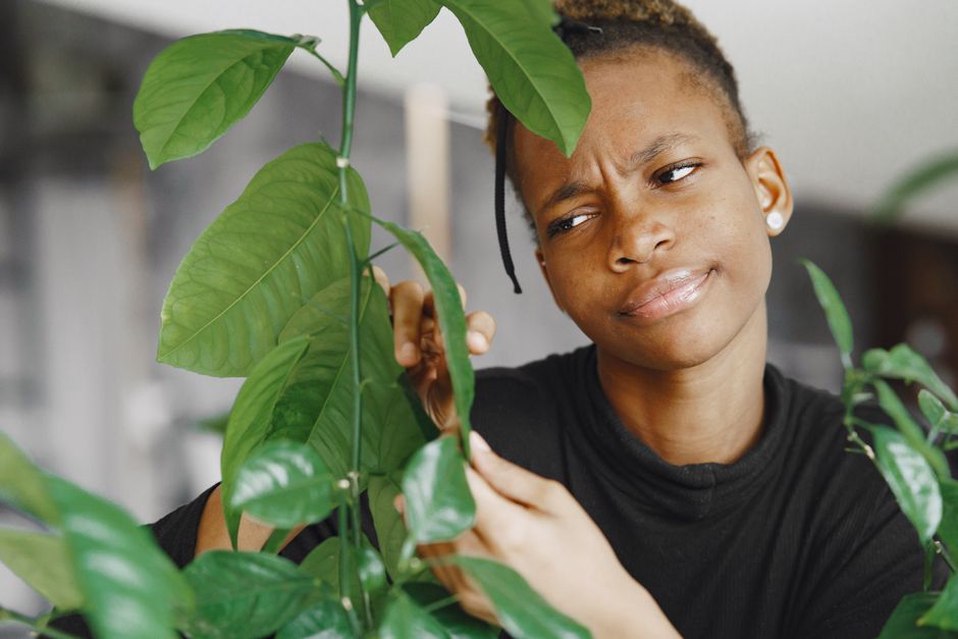
Distinguish cosmetic damage from a poor root system
Leaves are easy to see; roots take a little more checking. If store staff allow it, lift the nursery pot gently to see whether it feels unusually heavy and wet. Do not pull the plant out without permission. Roots visible through a drainage hole are usually firm and pale to tan when healthy, though colour varies by species and mix. Dark, mushy roots alongside foul-smelling, waterlogged mix are a stronger warning than one bent or browned leaf.
A heavily root-bound plant is not necessarily lost, but it may need prompt repotting and closer watering checks. For a first houseplant, one that can stay in its current pot while it settles in is simpler. It also has to adjust to different light and humidity at home, so avoid repotting immediately unless the pot or mix is clearly causing problems.
Understand what the pot actually does
The growing pot and decorative pot have different jobs. The growing pot should let excess water drain away. A cover pot hides it and protects the surface beneath, but it can also hide a pool of water. A simple first setup is a draining plastic nursery pot inside a slightly larger, watertight cover pot. Take the inner pot out to water, let it drain, then empty any water collected in the outer pot.
If you use a saucer, check it after watering and empty it once drainage has finished. Put a waterproof tray beneath the saucer on vulnerable surfaces; condensation, overflow and damp porous ceramics can damage finishes. Stones at the bottom of a pot without a drainage hole do not give excess water a way out. Water can remain trapped below the roots.
Pot size changes how the mix dries. A large volume of mix around a small root system can stay wet too long, particularly in weak light. Do not buy an oversized planter just to postpone repotting. When a healthy plant needs more room, a pot only modestly wider than its root ball is generally easier to manage than a much larger one.
Plan the first few weeks at home
Ask when the plant was last watered, but do not treat the answer as the start of a fixed schedule. Mix dries at different rates depending on light, temperature, airflow, pot material, plant size and season. Check the top portion with a finger; with a small pot, you can also learn how its weight changes between wet and partly dry. Species differ in how dry they should get before watering. The point is to check the mix, not to water every Saturday regardless of its condition.
If you already have plants, keep the newcomer apart for a short observation period, especially if you noticed questionable marks in the shop. Check beneath its leaves again over the next few weeks. Some drooping or leaf loss can follow a change of environment, but worsening damage, sticky leaves or visible insects call for investigation. Do not reach for fertiliser to correct every symptom: it cannot fix poor light, waterlogged roots or pests.
Protect the plant during transport in very cold or hot weather. Avoid prolonged exposure outdoors, and do not leave it in a parked car, where temperatures can change quickly. Once home, put it in the light level you chose before shopping rather than a darker corner while you decide where it looks best. If that position proves unsuitable, move the pot; extra water will not compensate for poor light.
Set a realistic first-purchase budget
The price tag may cover only the plant. Allow for a draining nursery pot if it does not have one, a saucer or cover pot, and protection for the shelf or floor. You do not need a collection of specialised tools or several fertilisers to get started. A small, healthy specimen often costs less than a mature one and gives you time to learn its growth pattern before it needs more space.
Before you pay, confirm the species name, inspect the leaves and pot, and ask when it was last watered. If you are buying a cover pot, try the nursery pot inside it. Make sure you can grip the rim easily enough to lift it out after watering and empty any collected water.