
A mural commissioned after a lobby is finished may cover a fire-safety sign, compete with wayfinding or require a new lighting circuit. Considered during schematic design, the same mural could inform the wall layout, lighting and visitor route. Art and architecture both affect how people experience a place, but bringing them together also means resolving dimensions, materials, maintenance and cost.
Where the disciplines meet—and where they differ
Architecture organizes space for use. A building must accommodate structure, circulation, weather protection, accessibility, safety systems and an operating budget. Art does not usually have to perform all those tasks. It can express an idea, invite interpretation or draw attention to an otherwise ordinary surface.
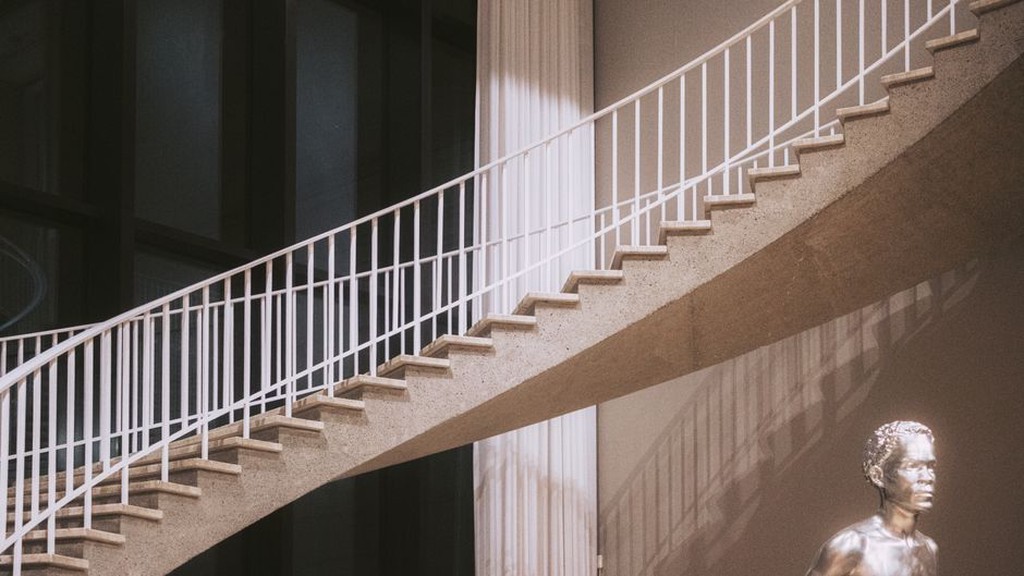
The distinction is useful, though the boundary is not fixed. A façade relief may shade glazing; a sculptural stair may organize circulation; a ceramic wall may serve as both artwork and durable finish. Artistic intent adds to the design, while the architectural team must test how the element performs as part of the building.
Art need not be a separate object. Proportion, rhythm, light and material transitions shape how a room feels. Repeated columns can set a measured pace through a hall. A well-placed opening can draw the eye to a courtyard without adding a display. The experience should support the space’s purpose, not obscure it.
Three ways art enters a building
Architecture as an expressive composition
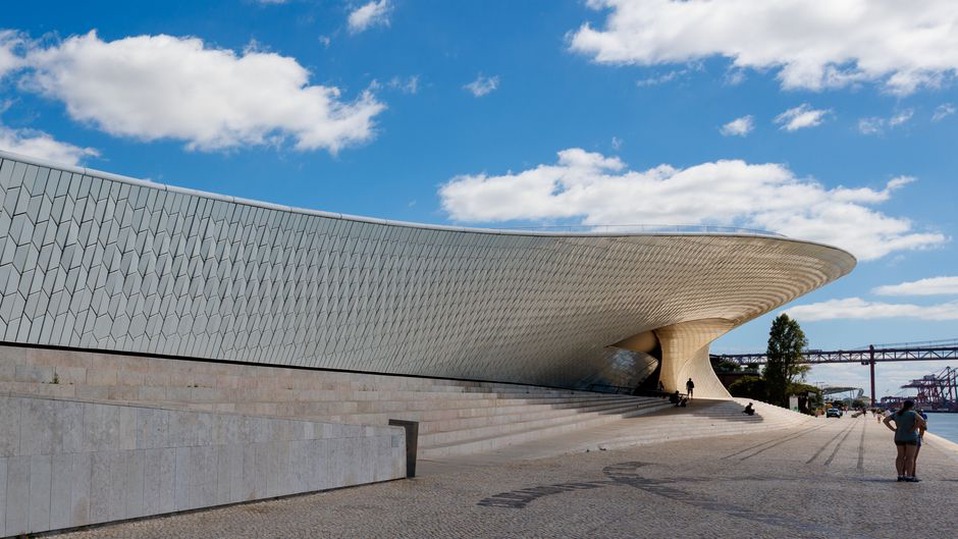
A building’s massing, silhouette and public spaces can communicate through form. A generous canopy may signal a civic entrance; a restrained palette may help a residential building sit comfortably on a quiet street. Expression does not require an unusual shape. The size of an opening, the depth of a reveal and the texture of masonry give a façade character at the scale people encounter it.
For a client, the test is not whether the form looks memorable in a rendering. It is whether it works in section and plan: Can occupants use the rooms comfortably? Can the envelope be built and maintained? Is the entrance clear from the route people actually take?
Art integrated into building components
Integrated work includes patterned screens, etched glazing, carved stone, artist-designed railings and mosaics. Because these elements become part of the building fabric, their dimensions and specifications need early coordination. A decorative screen may affect daylight, views, cleaning access and loads on its supports. An artist-designed handrail still needs a comfortable grip and must meet applicable safety requirements.
Mock-ups are especially useful when appearance depends on fabrication. A sample panel can show how a finish looks in daylight, where joints break a pattern and whether its texture suits a surface people will touch. Approval needs to cover visual intent and technical performance, not just a small color swatch.
Art installed within or around architecture
Freestanding sculpture, wall works and temporary installations can arrive later, but they still need planning. Floor loading, attachment points, security, lighting and installation access may be difficult or expensive to add after construction. Outdoor work also calls for attention to drainage, weather exposure and visitor movement.
Temporary programs need flexibility. A gallery wall may need power and hanging capacity for changing works; a public foyer may need clear rules about what can be suspended overhead. Designing for a range of installations is often more useful than building around a single piece that may later move.
Public meaning, everyday use
Art can make a place recognizable and give local communities a visible role in its identity. Size alone does not determine whether a work connects with people. A commission near a place where visitors wait, gather or pass every day may have more sustained contact with its audience than one positioned mainly for a distant photograph. Sightlines, seating, glare and walking speed all affect how the work is experienced.
Context matters too. An artist might respond to a neighborhood’s craft traditions or surrounding terrain, rather than copy motifs without their context. If a work refers to a community’s history, the brief should establish who will be consulted, who can review the interpretation and how the artist will be credited. Art should not stand in for meaningful engagement.
Legibility is particularly important in buildings with demanding daily routines. In a school, art can mark a shared entrance without making corridors confusing. In a healthcare setting, color and artwork may distinguish waiting areas, but they cannot be the only cues: signs must remain readable, and circulation must work for people with varied vision or familiarity with the building. Public art must also leave clear routes and sightlines where security and supervision require them.
Turn artistic ambition into a buildable brief
The most useful early conversation is specific about the intended experience and its constraints. “Create a landmark” gives designers little to test. “Make the public entrance visible from the transit stop without blocking views into the lobby” can be checked in drawings and on site. For a commissioned work, the brief should identify the location, approximate envelope, budget scope, installation date and parties with approval authority.
- Set the interface: Define what the artist designs and what the architect or specialist engineer must detail, support and certify.
- Protect essential functions: Check accessible routes, door clearances, fire-safety equipment, wayfinding and maintenance access before fixing the artwork’s location.
- Price the whole installation: Include foundations or reinforcement, lighting, controls, fabrication, transport, lifting, insurance and future replacement of components where relevant.
- Agree on review stages: Test the concept, materials, fabrication samples and installation details while changes are still feasible.
Responsibility continues after opening. A surface that looks compelling in a visualization may stain, fade or invite climbing. Exposed metalwork may need regular inspection. Digital art can depend on software, power and equipment that will eventually need replacement. The owner should know who holds the documentation and what happens if the original artist or fabricator is unavailable.
Judge the relationship at full scale
Drawings and renderings show composition, but rarely reproduce a visitor’s movement, eye level or changing daylight. Before final approval, teams can tape out an artwork’s footprint, review a full-size fragment or walk the proposed sightlines. These checks can reveal practical conflicts without reducing the artistic idea to a compliance exercise.
For a wall work beside an entrance, stand on the approach during the building’s busiest hours. Check whether people can see the work without stepping into the door swing, whether its lighting causes glare on nearby signs, and whether a cleaner can reach its upper edge using equipment the building actually owns.