
A sofa against the wall may seem like the obvious choice, yet it can leave an awkward strip of unused floor behind the chairs. Before changing colors or buying accessories, measure the room and try a different layout. Moving a table slightly might open up a route; moving it too far could make conversation uncomfortable. Judge the change by how the room works, not simply by how different it looks.
Look at what the room already has: furniture, daylight, lamps, wall finishes, textiles, artwork and views into adjoining spaces. Considering them together helps you avoid small changes that compete for attention. It also helps property owners decide where a limited maintenance budget will do the most good.
Start with a room audit, not a shopping list
Take photographs from the doorway and from the spots where people usually sit or stand. A photograph can reveal a blocked window, an isolated chair or a cluster of heavy-looking objects that is less obvious when you are in the room. Sketch a simple plan with approximate dimensions. Mark doors and their swing, windows, radiators and outlets. Note which furniture is difficult to move and which pieces could go elsewhere in the property.
Sort what you find into three categories:
- Functional: a route is obstructed, a task area is dim, or a cabinet cannot open fully.
- Visual: the room feels unbalanced, the focal point is unclear, or too many finishes compete.
- Maintenance: a marked wall, faded textile or damaged trim makes otherwise sound furnishings look tired.
Deal with functional and maintenance problems first. A new layout will not give an unlit reading chair a usable light, and decorative objects may draw more attention to peeling paint. If damp patches, persistent odors or staining return after cleaning, find and address the cause before covering the surface.
Change one thing at a time, then photograph the room again from the same positions. Check it in daylight and after dark: a layout that works at noon may feel cramped or dim in the evening.
Rearrange furniture around movement and use
Start with the main walking route. Someone moving between a door and a window, desk or adjoining room should not have to edge around a chair. Roughly 90 cm of clear width is a useful starting point for comfortable passage in many homes, though the right dimension depends on who uses the space and any accessibility requirements. Secondary gaps may be narrower; they still need to allow chairs to pull out and storage to open.
Then group furniture around what people do. Living-room chairs need not all face the television. Turn one toward the sofa for conversation, or pair it with an existing lamp and small table for reading. In a bedroom, check whether both sides of the bed need access before centering it. In a multipurpose room, place the desk where daylight reaches the work surface without causing persistent screen glare.
Large furniture does not always belong against a wall. Pulling a sofa slightly forward can define a seating area in a long room, as long as the main route stays clear. Moving a piece away from a window may restore daylight and make a modest room feel less crowded. Before shifting heavy items, use removable floor tape to mark a table's footprint and the space needed around it.
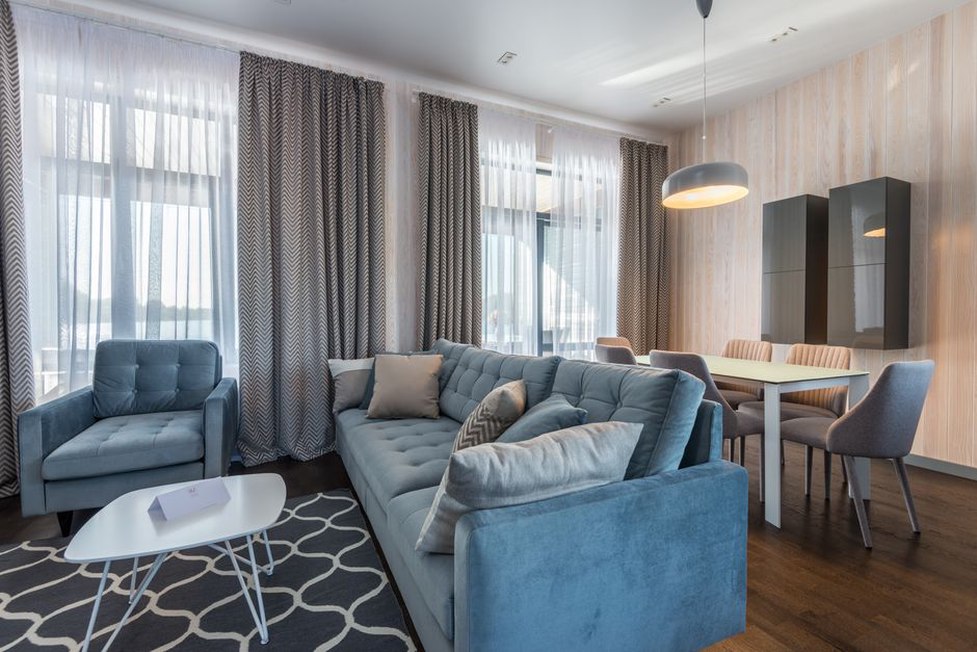
Check balance from the doorway
The doorway is often where people first take in a room. A tall bookcase and dark sofa on one side can make the space feel lopsided if the other side is nearly empty. Size, color and solidity all affect visual weight: an open-legged chair tends to look lighter than a closed cabinet of similar width. Moving a lamp, artwork or an existing plant may be enough to restore balance. You do not need a matching piece on the opposite wall.
Choose a focal point that suits the room's use. A fireplace, view, substantial artwork or well-placed table can give the arrangement a center. If a window frames a view, move tall furniture away from it before adding anything to the walls.
Use light to change the room's character
Light changes how paint, upholstery and wood look, as well as how comfortably a room functions. Begin with daylight. Clean accessible glazing, check whether open curtains still cover part of the window, and move objects casting unnecessary shadows over work surfaces. Keep privacy and glare in mind, especially around screens or in rooms with strong afternoon sun.
After dark, look at general lighting for circulation, task lighting for reading or work, and accent lighting for texture or artwork. One bright ceiling fitting can leave corners flat while casting shadows where people sit. Existing lamps may be more useful in different positions, provided their cords do not become trip hazards. Replacement bulbs must suit the fixture's stated ratings; check brightness, color appearance and dimmer compatibility where relevant.
Judge paint samples and textiles in the room itself, both by day and under its usual evening lights. A neutral that looks warm near a window may look quite different under a cooler lamp. A small sample viewed under shop lighting will not tell you that.
Refresh the surfaces already in the room
Cleaning may do more for a room than another decorative object. Dust on a lampshade reduces useful light, marks around switches make walls look worn, and residue on glass dulls daylight. Follow care instructions for paint, upholstery and flooring, and test an unfamiliar cleaner somewhere inconspicuous.
Next, attend to small repairs: reattach a loose curtain hook, tighten an appropriate cabinet pull, touch up a minor paint chip or straighten a picture. Loose electrical fittings, damaged wiring, water-related defects and uncertain wall conditions call for a qualified professional, not a cosmetic fix. In a rental or managed property, check the approval process before painting, drilling or changing fixed fittings.
Decide whether paint is the right intervention
Paint helps when a finish is worn or the room's surfaces lack cohesion, but it may not be necessary. Try reducing visual clutter and adjusting the lighting first. If painting still makes sense, test large sample areas on more than one wall and observe them at different times. Daylight direction, nearby finishes and artificial light will all affect the apparent color.
Think about the whole surface, not just a potential feature wall. A strong accent color can draw attention to a defect or an awkward wall shape. Repainting scuffed trim or a ceiling in its existing color may give a cleaner result with less disruption than a new palette. Prepare surfaces properly and choose a coating suited to the substrate and its exposure. Paint cannot fix moisture entering a wall.

Rework textiles and objects with restraint
Textiles help connect furniture with the room around it. Before replacing them, try what is already on hand: remove a throw that hides the sofa's shape, swap cushion covers between rooms, or straighten the curtains. If there is a rug elsewhere in the property, try it under the seating group. Size matters more than pattern here. A very small rug can make chairs look disconnected, while one that reaches at least beneath the front legs of the main seats often defines the group more clearly.
Check doors, heating equipment and floor-level outlets. A rug should not catch under a door or curl up along a route. Where slipping is a concern, particularly on smooth floors, use a suitable underlay. Keep fabric off radiators and light fixtures.
Edit shelves and tabletops before rearranging them. Clear a surface, then return objects that have a purpose or bring a distinct shape, texture or personal connection. Leave enough room to use the surface. A few related objects often read more clearly than small items spread evenly across every shelf. Store the rest for a week rather than discarding them immediately; you will soon learn what you miss.
Artwork can move too. Check its scale against the furniture below and view it from a normal seated or standing position, rather than only while holding it against the wall. Existing holes, wall construction and frame weight determine how it should be hung. If drilling is restricted, use only fixings rated for the object and suitable for the wall finish. For more on how artwork relates to its setting, see How Art and Architecture Work Together in a Building.
Choose changes that remain easy to live with
Before settling on a layout, go through the room's everyday tasks. Can someone open the window, clean behind furniture, reach a switch and pull out a chair without scraping the wall? Are heating and ventilation outlets unobstructed? Do doors, accessible routes and exits remain clear? Those checks matter more than symmetry in a photograph.
Shared and publicly used rooms may have additional access, fire-safety and facilities requirements. Never place furniture in a required exit route or treat decoration as a substitute for adequate lighting. Property managers should also consider how readily surfaces can be maintained and whether a finish suits the room's level of use.
Keep a short record of what changed: major furniture positions, lighting adjustments and surface repairs. It will help you reverse a choice that does not work and identify what actually made the difference, rather than crediting the nearest decorative detail.
For a first pass, clear the main route, move one existing lamp closer to the activity it serves, and remove three items from the most crowded surface. Use the room for two evenings before changing anything else. How easily you reach a seat, and whether the lamp gives you enough light, will tell you more than a photograph taken just after the move.