
When rain changes the day’s plans, it helps to have a few activities you can start with what’s already at home. Keep one option for moving around, one for making something, and one for a quiet spell. Choosing among three familiar options is easier than inventing a project when everyone is getting restless.
Screen-free time needn’t fill the whole day. Think about the ages involved, the space you have, how much adult attention an activity needs, and when the next meal or appointment is due. A ten-minute card game may fit better than a craft that takes an hour to set up and clear away.
Plan around time, space, and supervision
Start with the time you actually have. A short gap calls for something that can stop cleanly; a long afternoon leaves room for several activities. If children are involved, consider when an adult can join in or supervise. A project that needs constant help is a poor choice during a work call or while dinner is being made.
Then decide where each activity can happen. A table works for puzzles, drawing, and games; an open patch of floor suits movement; a comfortable seat makes reading or conversation easier. You don’t need permanent activity zones in a shared room. Clearing a table and keeping a washable mat handy may be enough. Keep doorways, stairs, and exits clear, especially during active games.
With mixed ages, give people different ways to take part. In a paper-building challenge, a younger child might fold and decorate pieces while an older child tests which shapes stand upright. Adults can join without turning it into a lesson. Have a quieter option available for anyone who finds noisy group games tiring.
Make a small, reusable activity menu
Put a short menu on paper rather than setting a strict schedule. That way, nobody needs to open a device just to choose what to do. A starter menu could include:
- Move: an indoor obstacle route, follow-the-leader, or a gentle stretching game.
- Make: folded-paper structures, a collaborative drawing, or a cardboard model.
- Think together: cards, charades, a word game, or a puzzle.
- Settle: independent reading, storytelling, or listening to music while drawing.
Keep the list short enough that choosing doesn’t become another task. Offering two suitable options often works better than asking everyone to agree on the whole afternoon.
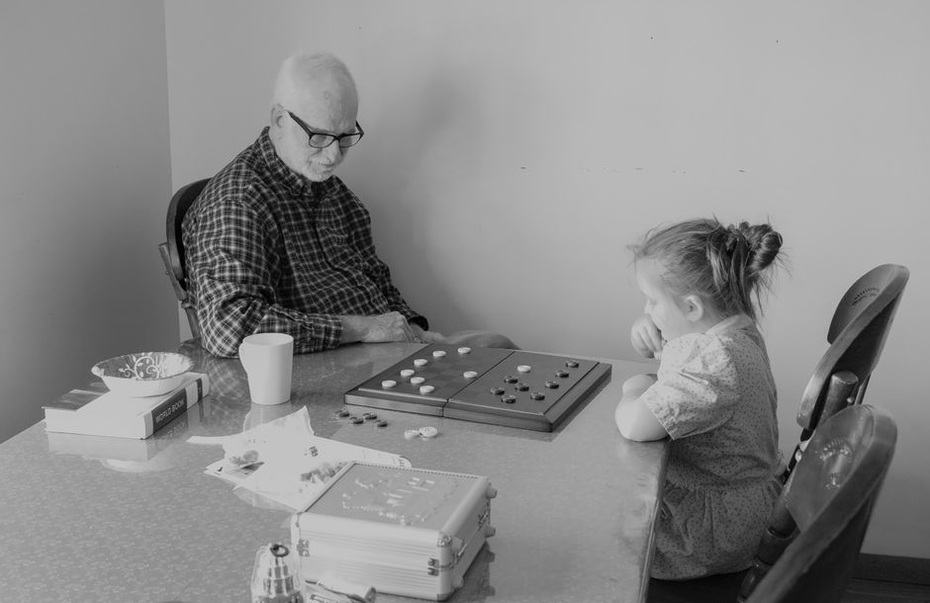
Match the activity to the room
Use the home as it is; you don’t need a playroom or a stockpile of materials. For a tabletop project, bring out only what you need. Keep spare paper, tape, and pencils in one container, with another nearby for scraps. That helps keep the mess out of areas needed for meals or work.
Movement takes a little more preparation. Check for slippery rugs, trailing cords, sharp furniture corners, and fragile objects. A route marked on the floor that winds around chairs is easier to manage than one that invites jumping off furniture. In a small space, or where neighbors share a floor or wall, try balance challenges, mime, or slow-motion games instead of running.
Light and sound matter, too. Use daylight for detailed work when you can, or a lamp that lights the table without glare. Group games can get loud in hard-surfaced rooms; moving to a rug or agreeing to speak more quietly may help. Small adjustments can prevent interruptions without rearranging the room.
Choose activities with a clear starting point
“Do a craft” leaves a lot to decide. Give people a prompt instead: “Build a paper bridge that spans two books,” “Draw a map of an imaginary indoor town,” or “Make three characters from folded scraps and tell a story about them.” Set out the materials first, and make the initial challenge manageable.
Games benefit from the same approach. For a scavenger hunt, set a boundary and a rule: find five objects with different textures in the living room, then put them back. If searching would disturb storage or other people, play a spotting game where nothing is moved.
Household tasks can work as shared activities when people want to take part and the job suits their abilities. Pairing clean socks or preparing a simple snack gives everyone a purpose and a natural stopping point. Children need close supervision around heat, knives, and appliances, so a no-cook task is often the easier choice.
Have a low-preparation option ready
Some rainy days leave little energy for planning. Keep a deck of cards, a familiar board game, drawing paper, or a read-aloud book somewhere easy to reach. A few things you can find quickly are more useful than a cupboard full of supplies you have to unpack.
Build in changes of pace
Few people want to do the same kind of activity for hours. Try a movement game, then a seated project, followed by a snack or quiet break. Treat that as a sequence, not a timetable. If the project is going well, let it continue; if interest fades, you have another option ready.
Give people room to participate differently. Someone may prefer keeping score to acting in charades, or drawing while listening to a story rather than sitting still. If a group activity causes friction, split into pairs or offer an independent task instead of insisting everyone finish together.
For a full afternoon, leave some time unassigned. People may want to carry on with a game, rest, or put materials away. Planning every minute creates more transitions—and more instructions.
Prepare for the next rainy day while cleaning up
Choose supplies with cleanup in mind. Washable drawing materials, a defined work surface, and containers for small pieces make it easier to stop when the room is needed again. Check age guidance on games and craft materials, particularly if small parts could be a choking hazard. For messy projects, protect the surface first and check that any glue or paint is appropriate for the people using it.
As you clear up, notice what held people’s attention and what slowed things down. A game that took too long to explain might need simpler rules next time; a project that ended early could be useful for a short gap. Add the activities that worked to the paper menu.
In a small apartment, that menu might be just three items on a card: a five-minute balance trail around the living-room rug, a paper bridge challenge at the table, and cards once the table is clear. Store the card with the deck and paper, ready for the next wet afternoon.