
A cleaning plan that calls for a thorough clean of every room on Saturday rarely survives contact with laundry, errands, and meals. Start with the jobs that keep the home usable and hygienic, give them time slots you can actually manage, and rotate the less urgent work.
The key distinction is what needs attention now and what can wait. A food spill needs cleaning promptly; a window usually does not. Your routine should reflect that difference instead of treating every dusty surface as equally urgent.
Build the routine from how the home is used
Before assigning days, walk through the home and notice where dirt, moisture, and clutter build up. If you cook most evenings, the hob and sink may need frequent attention. A bathroom shared by several people might need a midweek wipe-down, while an entry used for muddy shoes could be the main source of grit on the floors. Room size alone is a poor guide.
Sort what you find into three groups:
- Immediate tasks: deal with spills, food residue, wet towels left on vulnerable surfaces, and anything else that worsens if ignored.
- Weekly tasks: clean the toilet and bathroom sink, wash frequently used floors as needed, remove kitchen grease, and change bed linens on a schedule that suits the household.
- Occasional tasks: wash windows, wipe high shelves, move furniture to clean beneath it, and tackle other jobs that need less frequent attention.
These categories are a starting point, not a universal timetable. Pets, allergies, young children, flooring, ventilation, and the number of occupants all affect cleaning frequency. Visible soil, odors, and persistent dampness tell you more than a fixed calendar rule.
Keep the first list short enough to use. Write tasks as actions: “wipe bathroom basin and tap” is clearer than “sort out bathroom.” Put cupboards and appliances that do not need weekly attention on the occasional list. The weekly plan is for maintaining normal use, not resetting the entire home.
Set a baseline you can complete on a difficult week
Work out how much time you have in an ordinary week, then leave room for interruptions. A schedule that fills every free half-hour cannot absorb a late meeting, illness, or an extra load of laundry. Your baseline is the smallest set of jobs that keeps kitchens and bathrooms sanitary, walkways clear, and commonly used surfaces manageable.
For a small household, that might mean:
- Clearing and wiping kitchen food-preparation surfaces after use.
- Cleaning the toilet, bathroom sink, and frequently touched bathroom surfaces once a week, or more often if needed.
- Vacuuming or sweeping the busiest floor areas.
- Emptying rubbish and recycling before the containers overflow.
- Washing necessary laundry and putting it away.
A larger household, or one with pets, may need a different baseline. What matters is deciding what to protect when time is tight. Dusting decorative objects can wait; removing tracked-in grit from a timber floor may not. Grit can scratch a floor finish, while prolonged water exposure can damage some surfaces. The materials in your home should help set priorities.
Time each job once rather than guessing, and include getting supplies out and putting them away. “Clean bathroom: 15 minutes” is not a useful commitment if it routinely takes 30 because the supplies are elsewhere and towels must be moved first. After a week or two, change the time slot or narrow the job.
Give daily, weekly, and rotating work different places
Keep daily actions brief and attach them to things you already do: wipe the counter after preparing food, return items to the bathroom shelf after getting ready, or put shoes on a tray when you come inside. These habits do not replace cleaning. They stop a weekly session from beginning with half an hour of clearing surfaces.
Give weekly jobs a named slot. “Thursday after dinner: bathroom sink and toilet” is easier to follow than “clean bathroom sometime this week.” Attach the slot to something dependable, such as the end of a workday, a regular laundry cycle, or the day before rubbish collection.
Give rotating work its own slot rather than quietly adding it to the weekly list. You might wipe the extractor hood exterior one week and clean the living-room skirting boards the next. If time runs out, skip the rotating job and keep the baseline intact.
A sample week, not a required timetable
| When | Task block | Scope |
|---|---|---|
| Monday | Kitchen, 15–20 minutes | Wipe exposed surfaces and appliance fronts; clean the sink |
| Wednesday | Bathroom, 20–30 minutes | Clean toilet and basin; wipe splash-prone surfaces |
| Friday | Floors, 20–30 minutes | Sweep or vacuum busy areas; wash where needed |
| Weekend | Laundry and rotation | Finish necessary laundry; do one occasional task if time allows |
Those times are examples, not standards. Multiple bathrooms, stairs, heavy pet shedding, or limited mobility can change them substantially. If a block regularly runs over, split it across two days or reduce its scope. Scheduling the kitchen surfaces you actually use is better than promising to clean the entire kitchen and repeatedly skipping it.
Clean in an order that avoids doing work twice
Use a consistent order within each room: move items that do not belong, remove loose debris, clean surfaces, then finish with the floor. Dusting after mopping drops debris onto a clean floor. Washing a counter before moving dishes and containers leaves patches untouched.
Choose methods according to the material and the soil. A dry microfiber cloth or vacuum attachment can lift loose dust from many surfaces before a damp wipe. Kitchen grease and food residue may need detergent and water. In bathrooms, follow product directions and the surface manufacturer's care guidance: some acidic cleaners can damage natural stone and certain finishes. Test unfamiliar products in an inconspicuous spot.
Cleaning is not the same as disinfecting. Cleaning removes soil and reduces contamination; disinfecting requires a suitable product used as directed, including any stated contact time. Straightforward cleaning is often enough for routine household surfaces, while targeted disinfection may be appropriate when someone in a shared home is ill. Never mix products, especially bleach with ammonia or acidic cleaners, and keep chemicals away from children and pets.
Do not overlook moisture. Dry areas that collect splashes and let bathroom textiles dry between uses. If condensation, mold, or a musty smell keeps returning, check for ventilation problems or leaks. Cleaning the visible stain without addressing the moisture source is unlikely to fix the problem.
Make the routine easier to start
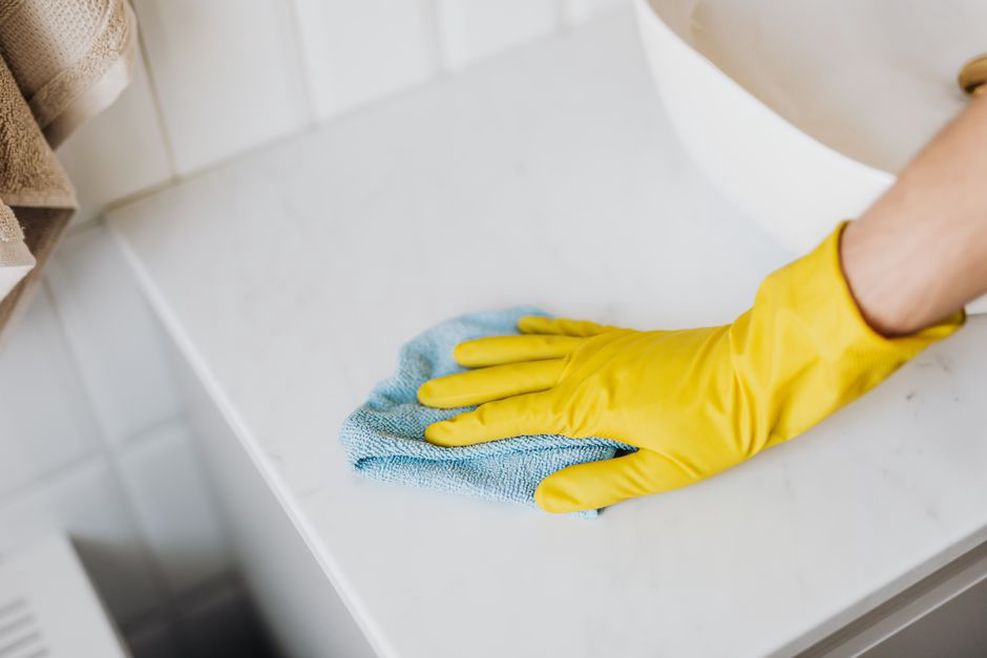
Collecting supplies from three rooms makes a small job harder to begin. Keep a modest set of suitable supplies near where they are used, out of reach of children and pets. A bathroom kit might hold cloths, a suitable surface cleaner, and toilet-cleaning supplies. Keep kitchen cloths separate from those used around toilets. Follow label instructions for storage and ventilation, and buy specialist products only when a surface calls for them.
Remove other obstacles where you can. An accessible laundry hamper works better than a distant one clothes never reach. A washable entrance mat can catch some dirt before it spreads. Making a little storage space for items that routinely cover a counter cuts down the clearing needed before cleaning. None of these changes eliminates the work, but each makes it easier to start.
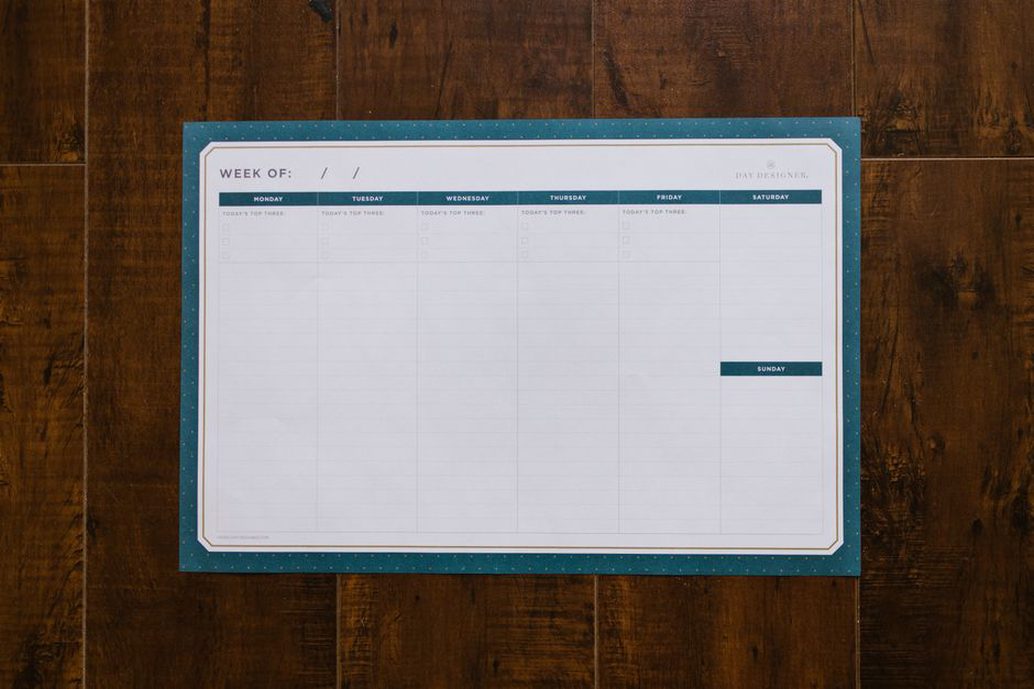
Put a checklist where the people doing the work can see it, whether that is a sheet on a cupboard door or a shared digital note. List actions and frequency rather than vague room names, and mark jobs complete so nobody has to guess whether the bin was emptied. In a shared home, decide who owns each task, including replacing supplies and taking out rubbish. “Everyone will notice and help” is rarely a dependable assignment.
Decide what “done” means
Give each weekly job a stopping point. “Clean the kitchen” could mean wiping a worktop or scrubbing every cabinet. A clearer instruction is “clear and wipe worktops, clean sink, wipe visible splashes, and sweep exposed floor.” Put cabinet interiors on the rotating list. A defined finish line makes timing easier and helps different household members work to a similar standard.
Tidying and cleaning also need separate steps. Putting objects in a basket makes a room easier to use, but it does not remove grime. On the other hand, a clean floor will soon be covered again if frequently used items have nowhere practical to go. Keep organizing projects from consuming the time reserved for basic cleaning.
Plan for missed days without starting over
Decide in advance what happens when a task slips. If Wednesday's bathroom job is missed, move it to the next available short slot and drop the optional rotating job if needed. Do not pile it onto every other weekend chore. One disruption need not become a backlog.
For especially busy periods, use a minimum version of the routine: food-contact surfaces, the toilet and basin, necessary laundry, rubbish, and a clear path through high-use rooms. Treat it as a temporary level of upkeep, not a failure. When time returns, resume the usual schedule instead of working through every missed dusting job in order.
After two or three weeks, check what the plan is telling you. Which tasks keep getting skipped? Which rooms get dirty before their assigned day? Which jobs take longer than expected? If the bathroom needs attention twice a week, divide the work into two short visits. If the living-room floor stays clean longer, use some of that time at the entry. The schedule should follow how the home is used.
For next week, pick one job you keep postponing and give it a day, a duration, and a finish line: “Wednesday after dinner, 15 minutes: clear and wipe the bathroom basin, clean the tap, and put away the cloth.” If it takes 25 minutes, record that and choose a slot that fits.