
A utensil jar beside the stove is handy until it takes up the only clear stretch of counter. In a small kitchen, storage needs to hold things without swallowing preparation space. Start with what you use every day: where do you use it, and do you need to reach it with one hand?
Give everyday items the shortest route
Put things near the task they support rather than wherever a shelf happens to be empty. Plates and glasses make sense near the dishwasher or drying area; pans, cooking oil and turners near the hob; knives and chopping boards near the main preparation surface. The exact arrangement depends on the room, but fewer trips across a narrow kitchen usually mean fewer interruptions and fewer things abandoned on the counter.
Before buying organizers, sort each cabinet into items used daily, weekly and occasionally. Keep daily items between roughly knee and shoulder height where possible. High cupboards and awkward corners are better for lighter pieces you seldom use. Heavy pans and appliances are easier and safer to handle on low, accessible shelves than above your head.
- At the sink: keep dish soap, a sponge or brush, and a cloth close by, with somewhere for each to drain or dry.
- At the preparation area: keep a board, knife and frequently used utensils within reach without covering the work surface.
- At the cooking area: group the pans, lids and tools used for routine meals; keep oil away from direct heat.
- At the serving area: put everyday crockery where it can be returned without crossing the main cooking route.
Two cooks may need access from different spots rather than one tightly packed station. Mugs might sit near the kettle while water glasses stay near the sink. If several people use the kitchen, try the arrangement during an ordinary meal before settling on it.
Protect the counter before adding storage
Every canister or rack on the counter claims space you might need to prepare food, set down a hot pan or unload groceries. Leave out only what you use often enough to justify the space. A small tray can hold a few daily essentials, provided you can lift it easily to clean and it neither blocks an outlet nor sits against the hob.
Walls can offer useful storage without taking over the counter. A short rail beneath a cabinet can hold utensils if it does not get in the way or create a grease trap behind the stove. A narrow shelf for mugs or small jars may suit a coffee station. Before mounting anything heavy, check the wall construction and choose fixings for the substrate. A loaded shelf needs suitable anchors, not adhesive hooks chosen for convenience.
Open storage works best for things used and washed often. Objects left untouched collect dust and cooking residue. Where a wall gets splashed, a shallow shelf can be easier to clean around than a deep one.
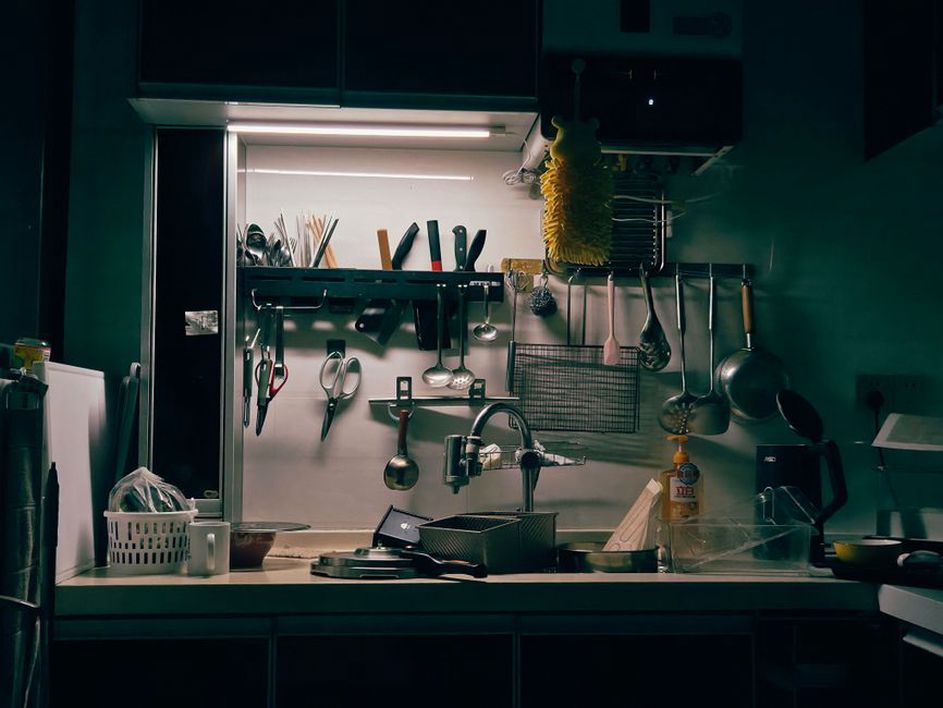
Make cabinets easier to reach into
Use depth without losing visibility
A deep base cabinet holds plenty, but its contents can be hard to retrieve. Pull-out baskets or shelves bring things forward; first check for hinges, pipes and door clearances. Measure the usable interior width, depth and height, not just the door opening, and make sure the pull-out has room to extend onto the kitchen floor. Freestanding bins with handles are simpler for occasional-use items, as long as they remain light enough to lift comfortably.
In upper cabinets, shelf risers can make a second level for short cups or bowls. Avoid tall, unstable stacks just to fill the space. You should be able to see frequently used items when you open the cabinet. If reaching the back means unloading the front row, too many everyday things are sharing that shelf.
Separate awkward shapes
Pan lids, baking trays and chopping boards often take up less usable space when stored upright rather than stacked flat. A vertical divider keeps each one accessible. Let boards dry fully before putting them away, and leave enough headroom to remove the tallest tray without catching it on a hinge.
Under the sink, fit storage around the plumbing rather than forcing in a standard shelf. A low-sided, washable caddy can hold cleaning supplies while leaving valves and connections visible. Keep shutoff valves accessible, and secure hazardous products from children or pets as the product label directs. If the cabinet is repeatedly damp, find the cause; a bin should not hide a leak.
Use narrow gaps with careful measurements
The gap beside a refrigerator or at the end of a cabinet run may take a slim trolley, but the visible gap may not be the usable one. Measure at floor, middle and counter height: walls and appliances are not always aligned. Allow for handles, skirting boards, the refrigerator door swing and the ventilation clearance specified for the appliance. Check that the trolley can roll all the way out without blocking the passage or hitting another door.
A cabinet door can hold light items such as foil boxes, cleaning cloths or measuring spoons. Check that an organizer clears the shelves and their contents when the door shuts. Adhesive fittings may fail with heat, moisture or repeated loading; mechanical fixings can be more reliable if the door material allows them. Never drill into an appliance panel or a door whose construction you do not know.
High cupboards are fine for spare serving pieces, not heavy equipment used every day. A stable step stool helps with occasional access; it does not make an overhead shelf a good home for a daily-use mixer.
Store food so it can be seen and used
Duplicate purchases and half-open packets can eat up a small pantry's capacity. Group food by use—breakfast staples, cooking ingredients, snacks—and put new supplies behind older ones when their dates allow. Shallow bins keep packets upright and visible instead of letting them disappear behind larger jars. If several people put groceries away, label bins by category.
There is no need to decant every ingredient into matching containers. Airtight containers can protect foods vulnerable to moisture or pests, but choose sizes that suit the quantities you normally buy and allow you to store a new package sensibly. Keep the original packaging, or transfer allergen, date and cooking information before throwing it away. Clear containers show how much is left; opaque ones need clear labels.
Keep food separate from cleaning chemicals and, where possible, away from heat and steam. Oils and spices can be near the cooking area, but prolonged heat and light may affect their quality. A nearby cabinet is often more practical than an exposed shelf directly above the hob.
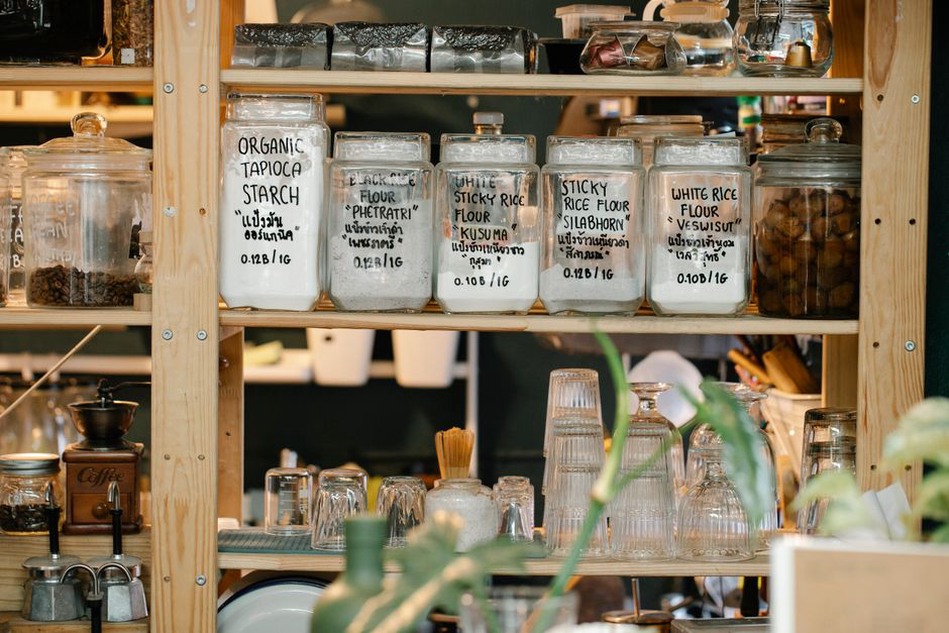
Keep the layout usable after the first week
If putting something away takes more effort than leaving it out, the storage arrangement needs another look. Choose organizers you can remove and clean, and leave room to grip what they hold. A shelf packed tightly on day one may be frustrating when new groceries arrive or dishes are still drying.
Work within the kitchen's physical limits. Keep appliance ventilation clear and electrical cords away from water and hot surfaces; do not store combustible materials close to the hob. In a rental, use reversible solutions only if they suit the surface and the tenancy terms permit them. Before installing fixed cabinetry or wall storage, check access to sockets, pipes and service panels.
After a week, notice what keeps landing on the counter. If the chopping board always ends up beside the sink, give it an upright slot nearby instead of insisting it belongs in a distant cabinet. If mugs gather beside the kettle, clear an accessible shelf there and move its less-used contents elsewhere.