
A façade material may be expected to last 50 years, while its sealants, fixings, coatings, and drainage details need inspection or replacement much sooner. Treating the visible finish as the entire system is a frequent cause of early failure. Service life depends on how product properties, exposure, detailing, installation, maintenance, and the building’s intended lifespan work together.
Start with service life, not a generic claim of durability
Longevity is the period during which a material or assembly performs its required function to an acceptable standard. That function may involve structural capacity, water resistance, fire performance, slip resistance, appearance, thermal performance, hygiene, or acoustic control. A material can remain intact yet no longer serve its purpose: fading may be unacceptable on a civic building, while worn flooring in a hospital corridor can become a safety concern.
Project teams should distinguish between three related terms:
- Design service life: the period a building or component is intended to function under stated conditions.
- Reference service life: an estimated life based on known use and environmental conditions.
- Residual service life: the expected remaining period of acceptable performance in an existing building.
These periods vary by component. Primary structural frames may be designed for several decades or longer, while membranes, joint sealants, exterior coatings, floor finishes, and mechanical components are commonly renewed during the building’s life. A durable building should allow for those replacement cycles without excessive demolition or disruption.
Assess the actual exposure conditions
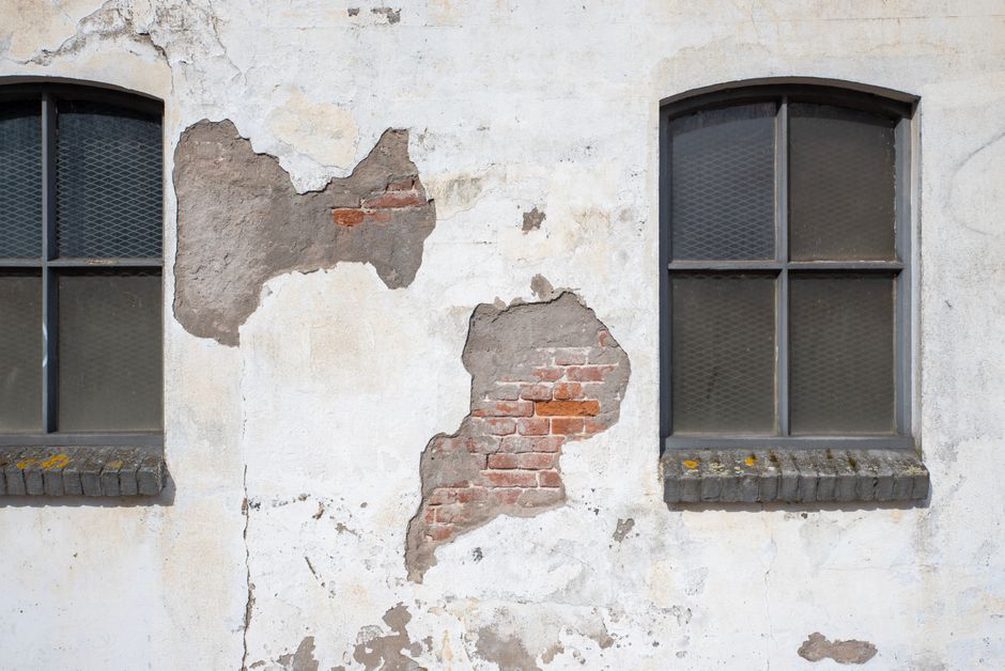
Published product data is useful only when it reflects the proposed setting. The same timber cladding, concrete mix, or metal finish can perform very differently depending on location, orientation, and height on the building. Exposure analysis should consider climate alongside local geometry and drainage conditions.
Environmental mechanisms that shorten service life
- Moisture and freeze-thaw cycling: Water entering porous materials or becoming trapped behind cladding can cause spalling, cracking, rot, corrosion, and mould. Repeated freezing increases the risk where materials can become saturated.
- Salt exposure: Marine air and de-icing salts accelerate corrosion in metals and reinforcement. Near coasts and roads, concrete cover, crack control, protective systems, and compatible fixings are particularly important.
- Ultraviolet radiation: UV exposure can fade pigments and degrade some polymers, sealants, membranes, and surface finishes.
- Heat and thermal movement: Dark surfaces, large panels, and materials with different coefficients of thermal expansion place repeated stress on joints and connections.
- Pollution and biological growth: Soot, acidic pollutants, algae, and lichen can affect appearance and, in persistently damp areas, contribute to deterioration.
- Use-related wear: Entrances, school corridors, public washrooms, loading areas, kitchens, and recreation facilities require materials assessed for abrasion, impact, cleaning chemicals, and concentrated foot or equipment traffic.
Microclimates can matter more than regional averages. A shaded north-facing wall, recessed balcony, parapet with poor runoff, or splash zone near grade may stay wet much longer than an open façade. These zones should be identified early in the drawings instead of applying one finish specification across every elevation.
Evaluate assemblies and details, not isolated products
Water management is one of the strongest influences on material life. Durable envelopes need a clear drainage path: sloped surfaces, drips, flashings, cavities where appropriate, drainage openings, capillary breaks, and accessible interfaces. Even a high-quality cladding panel will not compensate for unprotected cut edges, blocked weep holes, or fasteners that cause galvanic corrosion.
Compatibility deserves the same level of attention. Dissimilar metals can create electrochemical corrosion when moisture is present. An impermeable coating on a wall intended to dry outward may trap moisture in the substrate. Rigid finishes installed over moving substrates can crack at joints. Specifications should identify compatible primers, membranes, adhesives, fixings, and sealants rather than leaving those interfaces to site decisions.
For adaptable commercial assets, material choices should also allow for repair and modification. The principles discussed in Future-Ready Commercial Architecture: Planning for Adaptability, Performance and Resilience apply here: accessible service zones and demountable interior layers can reduce waste and future alteration costs.
Use evidence that is relevant and verifiable
Manufacturer warranties are not service-life predictions. They usually include conditions relating to installation, maintenance, exposure limits, and notice periods. Warranties should be reviewed, but material selection should also rely on test data, technical approvals, independent standards, documented projects in comparable conditions, and inspection records where available.
Useful evidence may include tested resistance to freeze-thaw cycles, water absorption, corrosion category, abrasion class, reaction to fire, UV resistance, slip resistance, and chemical resistance. Applicable requirements depend on the material and jurisdiction. Laboratory results also need careful interpretation: a test may confirm one characteristic without reproducing the full building assembly or decades of field exposure.
| Material category | Typical longevity risks | Early design checks |
|---|---|---|
| Concrete and masonry | Water ingress, freeze-thaw damage, chloride attack, cracking, efflorescence | Exposure class, drainage, jointing, concrete cover, compatible repair strategy |
| Timber | Persistent wetting, fungal decay, insect damage, UV weathering | Ventilation, separation from ground, end-grain protection, coating and inspection access |
| Metals | Corrosion, galvanic action, coating breakdown, thermal movement | Metal grade, protective coating, isolation of dissimilar metals, drainage at laps |
| Roofing membranes | Puncture, UV aging, ponding water, failed seams and penetrations | Slope, protection layers, drainage capacity, maintenance routes, tested detailing |
| Interior finishes | Abrasion, staining, impact, cleaning damage, moisture at edges | Traffic level, cleaning regime, repairability, spare stock, substrate preparation |
Calculate whole-life implications
The lowest initial cost rarely produces the lowest cost over the ownership period. Whole-life evaluation should account for procurement, installation, planned maintenance, inspection, cleaning, repairs, replacement, operational disruption, and end-of-life removal. It should also account for the consequences of failure. A leaking roof membrane above a data room or operating suite can create costs far beyond replacing the membrane itself.
A practical comparison uses consistent assumptions: the analysis period, expected maintenance intervals, discount rate where financial modelling is required, anticipated replacement dates, and realistic allowances for access equipment or tenant disruption. A façade finish with a longer nominal life but specialist-access requirements for every inspection may be less suitable than a shorter-lived system that can be repaired locally.
Questions for specifications and procurement
- What performance must this component retain, and for how long?
- Which exposure zones apply to each elevation, room, or external surface?
- What are the weak interfaces, penetrations, edges, and movement joints?
- Can damaged sections be inspected, repaired, or replaced without removing large areas?
- What maintenance actions, products, skills, and access arrangements are assumed?
- How will substitutions be controlled so that the approved assembly is not compromised on site?
Construction quality is inseparable from material longevity. Critical façade, roof, wet-area, and junction details should have clear mock-ups. Concealed work should be inspected before it is covered, and approved products and batch information should be recorded alongside photographs of drainage paths, membranes, and fixings. At handover, the owner should receive an asset register listing each material system, warranty conditions, cleaning restrictions, inspection dates, repair procedures, and spare materials. A documented reserve of matching façade panels and sealant specifications, for example, can turn a local impact repair into routine maintenance instead of an expensive search for discontinued products.