
One mug beside the sink is easy to work around. Several mugs, a used pan and a wet cloth can leave the next person nowhere to prepare food. In a shared kitchen, aim to leave the sink and a usable stretch of counter clear. That is more practical than expecting the whole room to look untouched after every meal.
Agree on what “ready for the next person” means
Housemates, office staff and people using a communal building may have different ideas of tidy. A short, visible agreement can head off recurring disputes. Spell out which dishes must be washed straight away, where clean items dry, whether food can stay on counters and who empties the bins. Work any existing building or workplace rules into the agreement rather than creating a competing set.
As a baseline, each person clears their food waste, deals with their dishes and wipes up spills they make. Shared surfaces and equipment need assigned care too: no single user causes all the buildup. If there is a dishwasher, agree on where dirty dishes go, whether they need scraping first and who starts or empties a full load. A clean load left inside can soon lead to dishes piling up on the counter.
Make the agreement easy to scan
- After use: clear food scraps, deal with dishes and wipe visible spills.
- At the end of the day: check the sink, counters, bin and any food left out.
- On a rota: clean shared equipment, check the refrigerator and replace common supplies.
Put the agreement inside a cupboard door or somewhere else people already look. A few observable tasks are easier to follow than a long list of prohibitions; every minor lapse does not need its own notice.
Reset the work area as part of cooking
Clear things as you cook so they do not all need dealing with at the end. Put packaging in the appropriate bin, return ingredients when you have finished with them and move used utensils to the washing area. Keep raw-food handling separate from ready-to-eat food, and follow the food-safety guidance that applies to the setting. A clear counter is no use if food handling is unsafe.
Once cooking is done, let hot cookware cool somewhere it cannot be touched by accident. Remove crumbs and grease from the hob when it is safe to clean. Wipe the preparation area with a suitable product, following its label and the surface manufacturer’s instructions. After contact with raw meat or other contamination, a quick wipe is not enough: use the appropriate cleaning and, where required, sanitizing procedure.
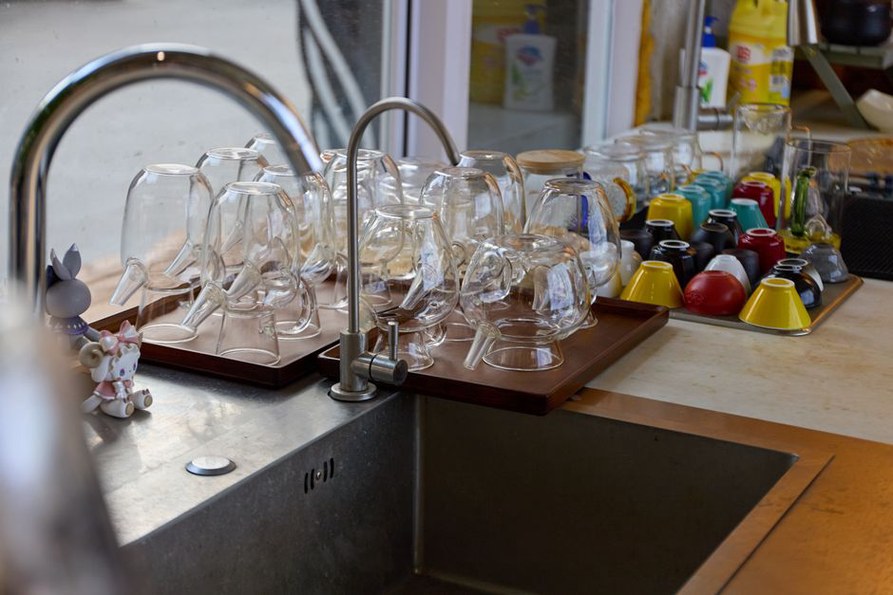
Some pans need soaking. Set them somewhere stable without blocking the sink, use only as much water as needed and agree on when they will be washed. “Soaking” should not mean leaving a pan there indefinitely. Put dry dishes away, too, so the rack is free for the next load.
Give everyday items a predictable home
Putting things away is easier when their storage places make sense. Keep mugs near the drink-making area, utensils near the preparation space and cleaning supplies within reach of authorized users, away from food. Leave cleaning chemicals in their original labelled containers, and follow local requirements and building policy for storage.
In a small kitchen, give frequently used items the easiest-to-reach shelves. Equipment used less often can go higher or farther back if it is still safe to retrieve. Nobody should have to reach over a hot appliance or stand on an improvised step to lift a heavy item. If several people bring similar containers, simple shelf labels can prevent mix-ups without putting a name on every cup.
Keep a space clear for setting down groceries and preparing meals. This is especially important for people using mobility aids or with limited reach. New storage must not narrow a route, obstruct a door or cover an outlet, vent or safety device. If belongings will not fit, reducing duplicate shared equipment may help more than adding another rack.
Keep the refrigerator understandable
Where appropriate, give each household, team or department a shelf or container and keep genuinely shared food separate. Add a name and date to prepared food when its owner or age would otherwise be unclear. Check refrigerator temperatures against the applicable food-safety guidance; an orderly shelf does not tell you whether food has been stored safely.
Review the contents regularly, but agree on disposal rules first. In an office or managed property, give notice before a scheduled clear-out so people can collect their food. Clean spills when they happen rather than waiting: sticky residue gets harder to remove and can spread to other containers.
Make waste and cleaning supplies easy to use
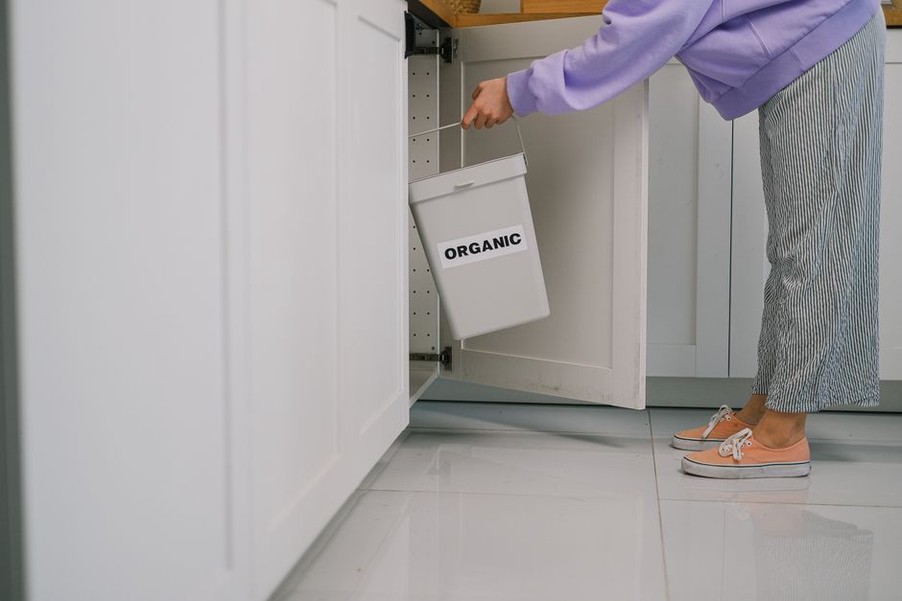
Bin labels should reflect the local collection system. “Recycling” alone may not tell users which packaging is accepted, especially if some of it is food-soiled. Position bins close to the work area without blocking movement or cupboards. Empty them before they overflow, then replace liners or clean the containers as needed.
Keep clean cloths or suitable disposable wipes near where they are used. If the kitchen uses reusable cloths, decide where used ones go and how often they are laundered. A damp cloth left on the counter is not ready for the next person. Keep dish-cleaning tools separate from those used on floors or other dirty surfaces, and store them where they can dry.
Never mix cleaning chemicals, including products containing bleach, with other cleaners. People sharing a kitchen may not know which products are on site, so readable labels and clear instructions matter more than an assortment of bottles. If a workplace or public building has a cleaning contractor, make clear which tasks belong to users and which belong to the cleaning staff. A scheduled visit is no reason to leave a spill unattended.
Divide recurring work without counting every crumb
People can clean up after their own meals, but shared equipment still needs attention. A simple rota can cover checks such as wiping appliance exteriors, cleaning the microwave after it cools, looking for refrigerator spills, washing the bin when needed and checking soap and cloth supplies. Set the frequency according to how much the kitchen is used.
Give each task a person or team and a handover time. “Everyone cleans the microwave” leaves it easy to overlook; “the Tuesday closing team checks the microwave” gives someone responsibility. In a workplace, the rota must fit paid duties, access arrangements and the building’s cleaning plan. At home, rotate the less pleasant jobs instead of leaving them to whoever minds the mess most.
When a task keeps getting missed, look at the setup before adding another reminder. An overflowing bin might need more frequent collection or a different location. Dishes beside an empty dishwasher may mean nobody knows whether its contents are clean.
Handle exceptions without blocking the kitchen
A large group meal, a broken dishwasher or someone leaving in a hurry can disrupt the routine. Agree on a temporary spot for unfinished washing-up and a reasonable time to clear it. If equipment is out of service, tell other users what to do next—for example, where they can wash dishes or whether a repair has been reported.
Keep maintenance separate from tidying. Report a leaking tap, blocked drain, damaged socket or refrigerator that is not cooling through the appropriate property or facilities channel. Do not work around an electrical fault by moving wet dishes closer to another outlet. In a managed building, include the appliance and its location in the report so the repair can be arranged promptly.
Where several people use the kitchen each day, ask the last person or closing team to make a two-minute check for running water, food on counters, an overflowing bin and dishes blocking the sink. If the dishwasher has finished, a small “clean” indicator on its door can spare the next user a guess—and keep dirty plates off the counter.