
“How much will planning permission add to the schedule?” depends on what the person needs to decide. A homeowner may want to know when construction can start. A developer may be working toward a financing deadline. A school operator may need to keep an existing building occupied during alterations. One reassuring estimate would hide the conditions that matter to each of them.
Customer questions reveal the decisions people are trying to make, but their wording rarely supplies enough context for a reliable answer. In architecture and property work, useful content identifies the decision, explains which facts could change the outcome and shows when project-specific advice is needed. It should help readers act without presenting a conditional judgment as a promise.
Capture the question and the decision behind it
Questions come through enquiry forms, design meetings, site visits, handovers and conversations with building operators. Keep the original wording where practical, but separate it from identifying details and untested project assumptions. A working note needs four fields: the question as asked, the project stage, the decision the customer faced and the facts the answer depended on. Do not copy correspondence containing names, addresses, budgets or confidential plans into a shared publishing file.
Compare “Can we keep the building open during refurbishment?” with “Which works could require temporary closure, and what information is needed to plan safe access?” The first captures the concern; the second makes the decisions clearer. The answer may depend on the work area, fire strategy, accessible routes, noise, dust control, services shutdowns and the authority having jurisdiction. Those conditions belong in the main explanation, not a footnote.
A question need not be common to deserve an article. Owners may often ask about lobby finishes, while a rarer question—whether an existing stair meets the requirements for a proposed change of use—could have much greater design and cost implications. Frequency helps set priorities, but so does the cost of getting an answer wrong.

Choose questions that can support a reliable answer
Before drafting, ask who needs the answer, what action it might inform and whether there is enough evidence for a useful public explanation. “Will my permit be approved?” cannot be answered for an unidentified project. An article could instead explain what is typically reviewed, distinguish planning from building-control processes where applicable, and identify the local checks to make before buying a property or committing to a design.
Some questions belong in a private project conversation. Exact construction costs for a confidential site, a contractor dispute or an interpretation of incomplete survey data can mislead when removed from context. Public content can explain the method: which documents establish scope, what assumptions affect estimates and when a qualified professional needs to inspect the site. It should not recreate a customer’s case in enough detail to identify them.
Group by decision, not just by shared words
“Is this material sustainable?” can arise during specification, procurement or maintenance planning. Each calls for a different answer. Early in design, the useful comparison may cover durability, embodied impacts and replacement cycles. At procurement, product documentation, availability and acceptable substitutions come into play. An operator may care more about cleaning and repairability. A single undifferentiated list makes those decisions harder to find.
Grouping questions this way also exposes gaps. If owners keep asking about operating costs but the practice has published only design-stage material, an article on reviewing energy-use assumptions before equipment choices are approved may be more useful than another general post about sustainability.
Build an answer around variables, evidence and next steps
Start with a direct but qualified answer. Then explain what could change it, which documents or checks establish the facts, and what decision can reasonably follow. For instance, “Can this commercial unit accommodate a medical use?” calls for more than a blanket yes or no. Before a lease or fit-out budget is finalised, the proposed use, access, servicing, ventilation, patient privacy and required approvals all need review.
A short working outline helps keep the answer focused:
- State the practical answer. Explain what is generally possible or required without treating it as a determination for every site.
- Name the deciding conditions. Separate what the customer can verify from what needs a survey, design work or authority review.
- Explain the consequence. Show how those conditions could affect the programme, scope, cost or operation.
- Identify the next document or conversation. Give the reader a way to move the decision forward without implying that the article replaces a professional assessment.
Take “Can we add solar panels later?” In principle, perhaps—but the answer depends on roof capacity and remaining life, orientation and shading, electrical routes, equipment space and any applicable consent requirements. During design, reserving routes and checking structural allowances may avoid disruptive retrofit work. For an existing building, an as-built review and suitable inspection come first. Praising renewable energy does not answer either version of the question.
Separate known facts from estimates
Quantities and timeframes can look more certain than they are. A permit duration, construction allowance or expected energy saving needs a stated basis: jurisdiction, scope, submission completeness, design assumptions and date, as applicable. Without those inputs, explain the process and its uncertainties rather than inventing a typical figure. Label an illustrative programme as an example, and show which steps can overlap and which cannot.
Technical terms need the same care. “Code-compliant” is a conclusion reached through assessment; it cannot be inferred from a photograph or a building’s previous use. Describe the checks instead: obtain available drawings, verify current conditions, identify the proposed occupancy and review the relevant requirements with the appropriate professionals and authority.
Choose a format that matches the question
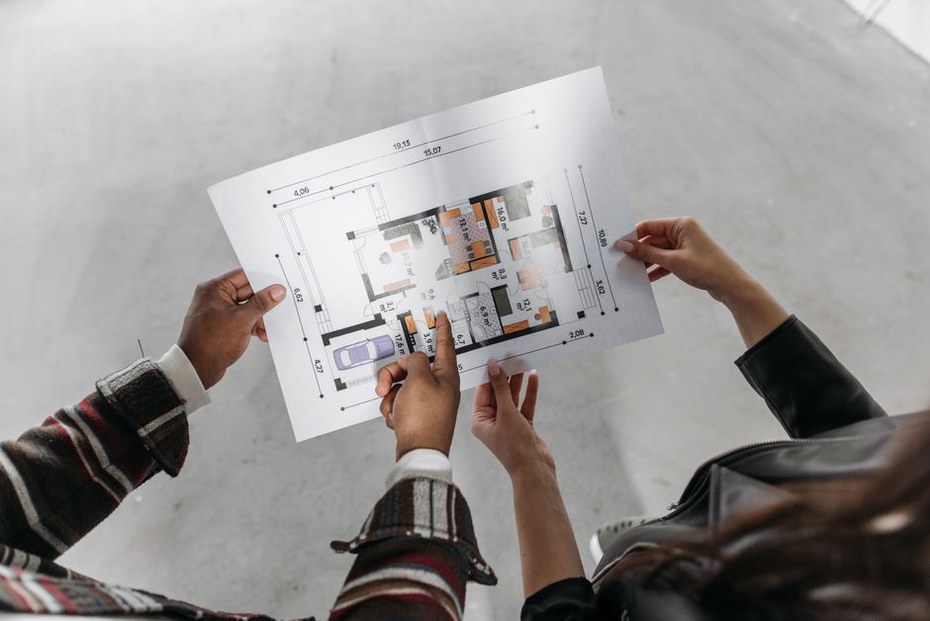
A narrow definition may need only a glossary entry. A choice between design approaches may call for a comparison with clear assumptions. A process question may be easier to follow as a sequence showing who supplies information and when a decision becomes difficult to reverse. Use a diagram or annotated drawing when it explains spatial relationships more clearly than prose, and make sure it depicts the conditions the text describes.
A decision table can make the limits of an answer easier to see:
| Customer question | Useful content angle | Boundary to state |
|---|---|---|
| Can we convert the ground floor to a clinic? | Checks to make before committing to a layout or lease | Use permissions and technical requirements depend on the location and proposal |
| Why did the cost estimate change? | How scope, survey findings and specification changes affect an estimate | An article cannot explain a particular contract variation without its records |
| Will timber cladding be hard to maintain? | How exposure, detailing, finish and access shape maintenance plans | Performance depends on product, installation and site conditions |
Use terms customers recognise, then define technical language when it matters. A developer may know “change of use”; a first-time owner may not realise that changing how a space is used can trigger requirements beyond a new interior layout. Precision need not exclude non-specialists.
Check the answer with the people responsible for it
Approvals, accessibility, fire safety, building performance and construction sequencing often cross disciplines. An architect can explain design implications but should not speak on behalf of a structural engineer, building-services designer, cost consultant, contractor or permitting authority. Before publication, decide which claims need technical review and who can verify them. Check drawings, specifications and current project records rather than relying on someone’s memory of a meeting.
Look for two kinds of error. One is a false claim, such as saying an approval is never required. The other is a true statement stretched too far: one project may not have needed approval, but another might. Scrutinise words such as “always,” “guaranteed” and “will” when discussing regulatory outcomes or costs.
Privacy needs its own check. Remove identifiable site conditions unless the owner has authorised their use. Label composite examples as illustrative rather than presenting them as actual commissions. If a photo or plan is necessary, confirm that publication rights and any required permissions cover it. Removing a name does little if an address or distinctive plan still identifies the project.
Publish where the question arises, then keep the answer current
Put an answer close to the decision it supports. Information needed for a feasibility study belongs near that service; guidance on operating responsibilities may fit better with handover resources. A team member can point a customer to the relevant page, but should still respond to the facts of that customer’s project. A public article is not a substitute for the conversation.
Once the answer is live, pay attention to where readers hesitate. Are they asking for a definition the article never gives? Are they treating an example as a guaranteed outcome? Revise the wording or limits before assuming the subject needs another article. If an approval process, product standard or design practice changes, check the original answer and its review date before reusing it.
For sensitive articles, keep a record of the reviewer, the version checked, any specified jurisdiction and the assumptions behind examples. This matters particularly for costs and permissions: a statement that was accurate when published may become unreliable after a policy change or a shift in market conditions. Updating a dated estimate in one sentence is not enough if the rest of the explanation still relies on its old assumptions.
When the next customer asks whether refurbishment can proceed while a building stays open, first record its operating hours and which entrances must remain usable. Those details may show whether the answer should focus on phased access, temporary routes or work that cannot safely proceed during occupancy.